
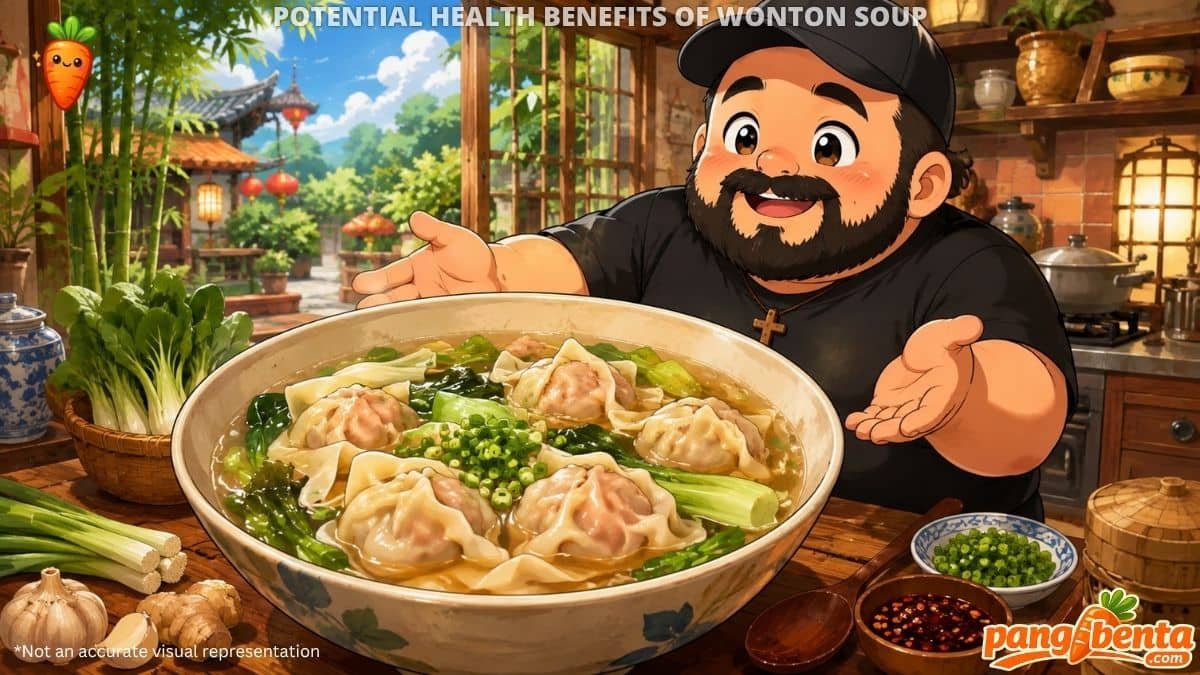
Wonton soup is one of those dishes that manages to be comforting without necessarily feeling heavy. At its simplest, it consists of delicate wontons, usually filled with seasoned pork, shrimp, chicken, or vegetables, served in a savory broth. Depending on the recipe, you may also find leafy greens, mushrooms, scallions, bok choy, cabbage, or other vegetables in the bowl.
But is wonton soup actually healthy?
I would describe it as a dish with good nutritional potential rather than an automatically healthy food. The broth contributes fluid, the wontons can provide protein and carbohydrates, and added vegetables can significantly improve the meal’s micronutrient and fiber content. At the same time, restaurant and packaged versions can contain substantial amounts of sodium.
So, instead of treating wonton soup as either “healthy” or “unhealthy,” it makes more sense to look at what is actually in the bowl.
Key Takeaways
- Wonton soup can provide protein, carbohydrates, fluids, and several vitamins and minerals in one meal.
- Its warm, broth-based format can be satisfying without requiring an especially rich or creamy base.
- The protein in meat-, poultry-, seafood-, or tofu-filled wontons can contribute to fullness and muscle maintenance.
- Adding bok choy, cabbage, mushrooms, spinach, carrots, or other vegetables can substantially improve its nutritional value.
- One of the biggest nutritional concerns is sodium, particularly in restaurant, instant, and commercially prepared versions. Soups are a notable dietary source of sodium.
- Homemade wonton soup gives you much more control over sodium, vegetables, protein, and portion size.
- Ultimately, the healthfulness of wonton soup depends more on its ingredients, broth, portion size, and preparation than on the name of the dish itself.
1. It Can Be a Useful Source of Protein
One of the first nutritional advantages I look at in wonton soup is its protein.
Traditional wontons are commonly filled with pork or shrimp, although chicken, turkey, fish, tofu, and vegetable versions are also available. When the filling contains a meaningful amount of meat, seafood, poultry, or tofu, the soup contributes protein along with its carbohydrates.
Protein has several important functions. Your body needs it to build and maintain muscle and other tissues and to produce enzymes, hormones, and many other compounds. Protein can also make a meal more satisfying.
The important detail is how much filling you are actually getting. A bowl containing only two small wontons is obviously going to provide considerably less protein than one containing six generously filled wontons.
If I wanted to turn wonton soup into a more complete meal, I would prioritize adequately filled wontons and consider adding extra lean protein, tofu, or an egg rather than simply adding more noodles.
📙 Potential Health Benefits of Hot and Sour Soup
2. The Broth Contributes to Fluid Intake
Wonton soup contains a substantial amount of water because broth makes up most of the bowl. That fluid counts toward your overall fluid intake.
This doesn’t mean soup should replace drinking water, but it does make broth-based dishes a practical way to consume additional fluids with a meal.
There is also something particularly appealing about warm broth when you’re feeling cold or simply want a comforting meal. And unlike cream-based soups, traditional wonton soup generally doesn’t require large amounts of cream, butter, or cheese to create its characteristic texture.
Just remember that hydrating doesn’t automatically mean low in sodium. A broth can contain plenty of water and still be extremely salty.
📙 Potential Health Benefits of Tomato Egg Drop Soup
3. Vegetables Can Turn It Into a Much More Nutrient-Dense Meal
A basic bowl containing broth and wontons is relatively simple nutritionally. Start adding vegetables, however, and the picture becomes much more interesting.
I like vegetables such as:
- Bok choy
- Napa cabbage
- Spinach
- Mushrooms
- Carrots
- Snow peas
- Scallions
- Chinese broccoli
Vegetables contribute combinations of fiber, potassium, folate, vitamin C, carotenoids, and numerous plant compounds, although the exact nutrients depend on what you add.
More broadly, diets rich in vegetables and fruits are associated with cardiovascular and other health benefits, and dietary variety helps provide a wider range of beneficial nutrients and plant compounds.
This is why I wouldn’t hesitate to bulk up wonton soup with vegetables. You increase the volume and nutritional variety of the meal without having to radically change the dish.
📙 Potential Health Benefits of Caesar Salad
4. It Can Be Relatively Light While Still Feeling Satisfying
Wonton soup can work nicely when you want something substantial but don’t necessarily want a very rich meal.
The combination of hot broth, protein-containing wontons, vegetables, and the volume of the soup can make a bowl satisfying. The calorie content, however, can vary tremendously depending on the size and number of wontons, filling, cooking method, noodles, oils, and other additions.
That’s worth emphasizing because you’ll sometimes see wonton soup described online as a “low-calorie food.”
It can be relatively low in calories, but there is no universal calorie count for wonton soup.
A small cup with three wontons is nutritionally very different from a large restaurant bowl containing eight wontons, noodles, fatty pork, and chili oil.
For weight management, I would therefore pay more attention to portion size and ingredients than to a generic calorie estimate found online.
📙 Potential Health Benefits of Bitter Leaf Soup
5. It Provides Carbohydrates for Energy
The wonton wrappers are typically made from wheat flour, which means they provide carbohydrates.
Carbohydrates are one of the body’s major energy sources, particularly for higher-intensity physical activity. In wonton soup, most of the carbohydrate generally comes from the wrappers and any noodles that are added.
That isn’t inherently a problem.
The better question is whether the overall meal is balanced. A bowl consisting mostly of noodles and wrappers with very little protein or vegetables is quite different from a bowl containing several protein-rich wontons and plenty of vegetables.
If you are watching your carbohydrate intake, you don’t necessarily have to eliminate wonton soup. You could simply emphasize vegetables and protein and avoid adding a large portion of noodles.
📙 Potential Health Benefits of Yellow Rice
6. It Can Provide a Range of Micronutrients
The nutritional profile of wonton soup changes considerably depending on the filling.
Pork, chicken, shrimp, tofu, eggs, mushrooms, and leafy greens all contribute different nutrients. Depending on your recipe, a bowl may provide varying amounts of:
- Iron
- Zinc
- Selenium
- B vitamins
- Phosphorus
- Potassium
- Vitamin A precursors
- Vitamin C
- Folate
This is another reason I prefer to think about the entire recipe rather than focusing only on the wontons.
A varied bowl containing protein, several vegetables, herbs, and broth is generally going to offer greater nutritional diversity than broth and dumplings alone.
📙 Potential Health Benefits of Oyster Stew
7. It Is Easy to Customize for a More Balanced Meal
Perhaps the biggest health advantage of wonton soup is simply how adaptable it is.
If I were making a healthier version at home, I could use lean ground pork, chicken, shrimp, or tofu for the filling; load the broth with vegetables; reduce the amount of added salt and soy sauce; and use herbs, ginger, garlic, scallions, vinegar, mushrooms, or spices to build flavor.
That flexibility matters.
Rather than searching for a special “healthy wonton soup,” you can improve the nutritional profile of an ordinary recipe through a series of small changes.
This also fits a broader principle of healthy eating: the overall quality and composition of the meal matters more than focusing on a single nutrient in isolation. Harvard’s Healthy Eating Plate, for example, emphasizes vegetables, healthy protein sources, whole grains, and overall diet quality.
📙 Potential Health Benefits of Cullen Skink
The Biggest Concern: Wonton Soup Can Be High in Sodium
If there is one nutritional drawback I would pay close attention to, it is sodium.
Broth, soy sauce, bouillon cubes, seasoning powders, oyster sauce, commercially prepared dumplings, and other ingredients can all contribute sodium. Restaurant soup can be particularly difficult to assess because you usually don’t know exactly how the broth was prepared.
The American Heart Association recommends no more than 2,300 mg of sodium per day, with an optimal goal of no more than 1,500 mg per day for most adults.
Soups are also among the important sources of sodium in the typical diet.
That doesn’t mean you need to avoid wonton soup. It means sodium is worth considering in the context of everything else you eat that day.
At home, using unsalted or reduced-sodium broth gives you considerably more control. You can then build flavor with ginger, garlic, scallions, mushrooms, rice vinegar, pepper, chili, cilantro, or other aromatics before deciding how much salt or soy sauce is actually necessary.
And don’t assume that a product labeled “reduced sodium” is automatically low in sodium. A reduced-sodium product can still contain a substantial amount, so checking the Nutrition Facts panel is more informative.
📙 Probable Health Benefits of Different Dishes
How to Make Wonton Soup Healthier
You don’t have to reinvent the recipe. A few adjustments can make a meaningful difference.
Use a lower-sodium broth.
This is probably the most important change if sodium is a concern.
Add considerably more vegetables.
Bok choy, mushrooms, spinach, cabbage, carrots, and similar vegetables increase the volume, fiber, and micronutrient content of the meal.
Choose a protein-rich filling.
Lean pork, shrimp, chicken, turkey, or tofu can work well.
Don’t overdo the wonton wrappers or noodles.
Wontons already contain wrappers, so adding a large portion of noodles can make the meal much more carbohydrate-heavy.
Build flavor without relying entirely on salt.
Garlic, ginger, scallions, mushrooms, vinegar, chili, pepper, cilantro, and sesame can add complexity.
Watch the extras.
Soy sauce, chili crisp, fried garlic, sesame oil, and other toppings can be delicious, but sodium, oil, and calories can accumulate quickly.
Is Homemade Wonton Soup Healthier Than Restaurant Wonton Soup?
It certainly can be.
The advantage of homemade soup isn’t that home cooking magically makes a food healthy. The advantage is control.
You decide how much sodium goes into the broth. You choose the meat-to-wrapper ratio. You determine how many vegetables are included and how much oil is used.
Restaurant wonton soup can still fit into a healthy eating pattern, but its sodium content and portion size may be harder to judge.
If I were ordering it regularly, I would consider asking whether a lower-sodium broth is available and avoid automatically adding extra soy sauce before tasting the soup.
So, Is Wonton Soup Healthy?
I think the fairest answer is: wonton soup can be a nutritious part of a balanced diet, but its healthfulness depends heavily on how it is prepared.
Its potential strengths include protein from the filling, fluids from the broth, carbohydrates for energy, and vitamins, minerals, fiber, and plant compounds when plenty of vegetables are included.
Its primary nutritional weakness is often sodium.
A homemade bowl containing lean protein, plenty of vegetables, a reasonable number of wontons, and lower-sodium broth can be a surprisingly balanced meal. A restaurant version made with salty broth, fatty filling, lots of noodles, and few vegetables is a different nutritional proposition.
That’s why I wouldn’t judge wonton soup simply by its reputation as a “light soup.” Look at what’s actually in the bowl.
Frequently Asked Questions
1. Is wonton soup good for weight loss?
It can fit into a weight-loss diet, particularly when it is broth-based, contains vegetables and adequate protein, and is eaten in an appropriate portion. But wonton soup does not inherently cause weight loss. Your overall calorie intake, diet quality, activity level, sleep, and other factors matter much more.
2. Is wonton soup high in protein?
It can provide protein, but the amount varies substantially. The number and size of the wontons and the amount and type of filling make a major difference. Adding tofu, chicken, shrimp, egg, or other protein-rich ingredients can increase the protein content.
3. Is wonton soup high in carbohydrates?
Usually it contains a moderate amount of carbohydrate from the wheat-based wonton wrappers. Adding noodles can increase the carbohydrate content considerably.
4. Is wonton soup high in sodium?
It often can be, particularly when made with commercially prepared broth, bouillon, soy sauce, seasoning mixes, or other salty ingredients. Soups are a significant source of dietary sodium, so checking nutrition information when available is worthwhile.
5. Is wonton soup healthier than fried wontons?
Generally, boiled wontons served in broth avoid the additional cooking oil associated with deep-frying. However, the complete nutritional comparison still depends on portion size, filling, broth, sauces, and other ingredients.
6. Can I eat wonton soup regularly?
Potentially, yes. If you eat it frequently, I would focus on lower-sodium broth, plenty of vegetables, an appropriate portion of wontons, and a good source of protein. Variety across your overall diet remains important.
7. Is wonton soup good when you’re sick?
Warm broth can be soothing and contributes fluids, while the wontons provide some energy and nutrients. But wonton soup isn’t a treatment for infections or other illnesses. If you’re sick, your individual hydration, nutrition, symptoms, and medical needs should guide what you eat.
8. What is the healthiest way to prepare wonton soup?
A strong starting point is a lower-sodium broth combined with protein-rich wontons and plenty of vegetables. Use ginger, garlic, mushrooms, scallions, herbs, vinegar, and spices for additional flavor so that you don’t have to depend entirely on salt.
Content Disclaimer
This article is intended for general informational and educational purposes only and should not be considered medical, nutritional, diagnostic, or treatment advice. The nutritional content of wonton soup varies considerably depending on the recipe, ingredients, serving size, brand, and restaurant preparation.
People with hypertension, kidney disease, cardiovascular conditions, diabetes, food allergies, or other conditions requiring dietary modification may have different nutritional needs, particularly regarding sodium, protein, carbohydrates, or specific ingredients. Consult a qualified healthcare professional or registered dietitian for advice appropriate to your individual health circumstances.