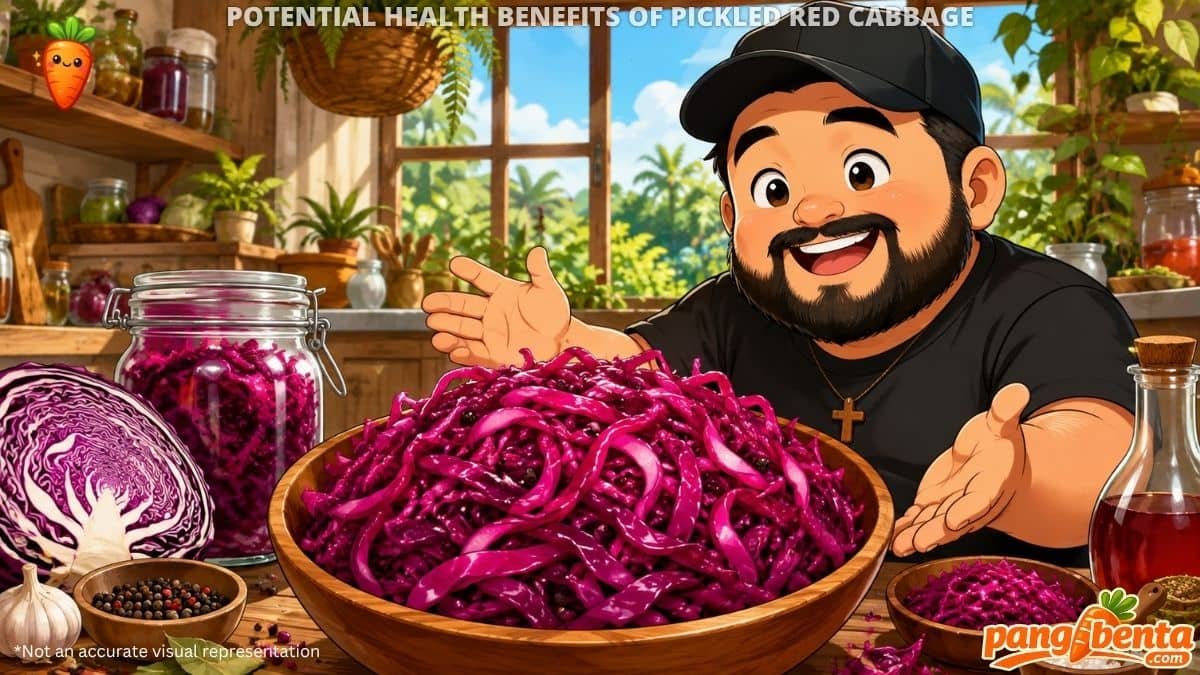
Pickled red cabbage is one of those foods that can do more than simply add color, crunch, and acidity to a meal. Red cabbage naturally contains fiber, vitamins, minerals, glucosinolates, and distinctive purple-red pigments called anthocyanins. Depending on how it is pickled, the finished product may also contain beneficial microorganisms produced through fermentation.
That distinction is important. Some pickled red cabbage is made quickly by soaking cabbage in vinegar, while traditional fermented versions rely on lactic acid bacteria to produce acidity over time. Both can be nutritious, but only properly fermented, unpasteurized varieties are likely to provide meaningful amounts of live microorganisms. Research on fermented vegetables suggests that their potential benefits may come from a combination of the vegetables themselves, their plant compounds, and compounds or microbes produced during fermentation.
So, what might happen when you regularly include pickled red cabbage in an otherwise balanced diet? Here are the potential benefits worth knowing.
Key Takeaways
- Pickled red cabbage retains beneficial plant compounds, including anthocyanins, although fermentation and storage can reduce their concentrations.
- Fermented red cabbage may contain live lactic acid bacteria, potentially supporting the gut microbiome, provided the product hasn’t been pasteurized after fermentation.
- Red cabbage contains antioxidant and anti-inflammatory compounds, particularly anthocyanins, that are being studied for cardiovascular, metabolic, neurological, and other health effects.
- It can contribute dietary fiber while adding plenty of flavor for relatively little food volume.
- Pickled isn’t automatically better than fresh. Research has found that fermentation can decrease some red cabbage anthocyanins and their bioavailability.
- Watch the sodium. Many fermented and commercially pickled vegetables contain substantial amounts of salt, so portion size and the nutrition label matter.
1. Provides Powerful Anthocyanin Antioxidants
The first thing you’ll probably notice about red cabbage is its striking purple-red color. Those colors aren’t merely decorative; they come largely from anthocyanins.
Anthocyanins are a family of plant pigments found in red, blue, and purple fruits and vegetables. Research has associated anthocyanin-rich foods with antioxidant and anti-inflammatory activity and potential benefits involving cardiovascular and metabolic health.
Red cabbage is particularly interesting because it contains numerous cyanidin-based anthocyanins. Human research examining both fresh and fermented red cabbage has confirmed that these compounds and their metabolites can be detected after consumption.
That doesn’t mean a forkful of pickled cabbage acts like medicine. Instead, I would think of it as another practical way to increase the variety of colorful, phytochemical-rich vegetables in your diet.
📙 Potential Health Benefits of Broccoli Microgreens
2. May Support a Healthier Gut
This is where the type of pickled cabbage really matters.
If red cabbage is naturally fermented, lactic acid bacteria convert carbohydrates in the cabbage into acids. Fermented vegetables can consequently contain microorganisms and fermentation products that may interact with our intestinal microbiome. Reviews of human studies suggest fermented foods can alter gut microbial populations, although the effects depend heavily on the food, microorganisms, amount consumed, and individual.
A more recent systematic review and meta-analysis has also examined fermented-food consumption in relation to gastrointestinal well-being, reflecting growing clinical interest in this area.
However, I wouldn’t automatically call every jar of pickled red cabbage a “probiotic food.” Vinegar-pickled cabbage may not have undergone fermentation at all, and heat treatment or pasteurization can greatly reduce or eliminate live microorganisms.
If live cultures are what you’re looking for, check the label for terms such as naturally fermented, unpasteurized, or contains live cultures, and follow the product’s refrigeration instructions.
📙 Potential Health Benefits of Vietnamese Coriander
3. Supplies Dietary Fiber
Pickling doesn’t magically remove the basic structure of cabbage. You’re still eating a vegetable, and that means you’re getting dietary fiber.
Fiber helps support normal bowel function, increases dietary bulk, and provides substrates that certain beneficial gut microorganisms can use. Diets rich in fiber-containing plant foods are also consistently associated with better long-term metabolic and cardiovascular health.
There’s another practical advantage: pickled cabbage is strongly flavored. A relatively small serving can make sandwiches, grain bowls, salads, wraps, eggs, fish, and meat dishes considerably more interesting without needing a heavy sauce.
In other words, one indirect benefit may simply be that it makes vegetables easier and more enjoyable to eat regularly.
📙 Potential Health Benefits of Scarlet Runner Beans
4. May Provide Antioxidant and Anti-Inflammatory Support
Our bodies constantly generate reactive molecules through normal metabolism. Oxidative stress occurs when the balance between these molecules and our antioxidant defenses becomes disrupted.
Red cabbage supplies several phytochemicals with antioxidant activity, particularly anthocyanins. Anthocyanins have been studied for their ability to influence oxidative and inflammatory pathways.
Research specifically involving anthocyanins from Brassica vegetables, including red cabbage, has explored potential anti-inflammatory, metabolic, neuroprotective, and gastrointestinal effects. Much of this evidence, however, comes from laboratory and animal research rather than large clinical trials in people.
That’s why I prefer saying pickled red cabbage may contribute to an antioxidant-rich diet rather than claiming that it prevents or treats inflammatory diseases.
📙 Potential Health Benefits of Hyacinth Beans
5. Contains Compounds Characteristic of Cruciferous Vegetables
Red cabbage belongs to the Brassica family, alongside broccoli, cauliflower, kale, Brussels sprouts, and other cabbages.
These vegetables contain compounds called glucosinolates. When plant tissue is chopped, chewed, or otherwise broken down, glucosinolates can be transformed into other biologically active compounds.
These substances are among the reasons cruciferous vegetables have attracted considerable attention in nutrition research, particularly in relation to cellular defense mechanisms and long-term health.
Pickling and fermentation can change the concentrations and forms of these compounds, however, so we shouldn’t assume that fermented cabbage has exactly the same phytochemical profile as raw cabbage.
The bigger nutritional lesson is simpler: pickled red cabbage gives you another way to include cruciferous vegetables in your diet.
📙 Potential Health Benefits of Pigeon Peas
6. May Complement Cardiovascular Health
Pickled red cabbage isn’t a heart-health treatment, but several characteristics can fit nicely into a heart-conscious diet.
You get fiber and anthocyanin-rich plant material without needing large amounts of saturated fat. Anthocyanins themselves have attracted considerable interest for their potential effects on cardiovascular health and inflammation.
There is one major caveat: sodium.
Salt is commonly used during vegetable fermentation, and some commercial pickled products can be quite salty. That can work against your goals if you’re trying to limit sodium.
My suggestion is straightforward: check the nutrition label, compare brands, and pay attention to serving size. Pickled cabbage can be part of a heart-friendly eating pattern without needing to become an unlimited food.
📙 Potential Health Benefits of Yardlong Beans
7. May Help Make Healthy Meals More Satisfying
Not every health benefit has to involve a complicated biochemical pathway.
Pickled red cabbage gives food crunch, acidity, sweetness, saltiness, and a striking color. That combination can transform relatively simple foods.
Try it with:
- grilled chicken or fish
- beans and lentils
- eggs
- sandwiches and wraps
- rice or grain bowls
- salads
- roasted vegetables
The acidity can cut through richer foods, while the crunch adds texture. If having a spoonful of pickled cabbage makes a bowl of vegetables, beans, or lean protein more enjoyable, that’s a worthwhile dietary benefit in itself.
📙 Potential Health Benefits of Bitter Leaf and Garlic
8. Fermented Red Cabbage May Offer Benefits Beyond Raw Cabbage, But It’s Not Necessarily “Healthier”
Fermentation is fascinating because microorganisms transform the food while preserving it. Fermented vegetables can contain organic acids, microbial metabolites, and potentially beneficial bacteria not present at the same levels in fresh vegetables.
But there’s an important trade-off.
One study comparing fresh and fermented red cabbage found that anthocyanin bioavailability was more than 10% higher after fresh cabbage consumption than after fermented cabbage consumption. Fresh cabbage also produced greater plasma antioxidant capacity in that small human study.
Another analysis found fermentation reduced total anthocyanin content by about 24%.
So I wouldn’t rank one as universally superior. Fresh red cabbage may preserve more of certain phytochemicals, while traditionally fermented cabbage can provide fermentation-derived compounds and potentially live microorganisms.
Eating both gives you the advantages of variety.
📙 Potential Wellness Benefits of Different Vegetables
Are There Any Downsides?
For most people, pickled red cabbage can comfortably fit into a balanced diet. There are still a few things I’d keep in mind.
Sodium is the biggest consideration. Fermented and pickled foods frequently rely on salt for preservation, flavor, and microbial control. If you’re limiting sodium, compare labels and keep portions reasonable.
Added sugar can vary considerably. Some vinegar-pickled red cabbage recipes contain quite a lot of sugar. Again, the nutrition label tells you more than the word “pickled” does.
Fermented doesn’t always mean probiotic. Heating or pasteurization can destroy live microorganisms. And even when microorganisms remain alive, not every strain present in fermented food meets the scientific definition of a probiotic.
Fermentation isn’t guaranteed to increase every nutrient. Some compounds can decrease during processing. Vitamin C, for example, may be lost during vegetable fermentation, and studies show that red cabbage anthocyanins can also decline.
Pickled vs. Fermented Red Cabbage: What’s the Difference?
This distinction is worth remembering.
Vinegar-pickled red cabbage is preserved primarily by adding an acid such as vinegar. It can still provide cabbage’s fiber and phytochemicals, but it doesn’t necessarily contain beneficial live microorganisms.
Fermented red cabbage develops acidity through microorganisms, typically lactic acid bacteria, that convert sugars into lactic acid. Traditionally prepared versions can therefore contain live microorganisms and compounds created during fermentation.
If your main goal is simply to eat more vegetables, either can work.
If you’re specifically interested in live cultures, look for genuinely fermented, unpasteurized cabbage.
📚 More about Pickled Red Cabbage
The Bottom Line
Pickled red cabbage isn’t a miracle food, but I think it deserves more credit than being treated as nothing more than a colorful condiment.
It gives you a convenient way to eat a cruciferous vegetable rich in anthocyanins and other plant compounds. If it’s naturally fermented and unpasteurized, it may also supply live microorganisms and fermentation-derived compounds that could support gastrointestinal health.
At the same time, fermentation doesn’t make cabbage automatically healthier. Some antioxidants decline during processing, and salty or heavily sweetened varieties can introduce nutritional trade-offs.
The best approach is probably the simplest one: enjoy pickled red cabbage as one part of a varied diet rich in vegetables, fruits, legumes, whole grains, nuts, seeds, and other minimally processed foods.
And if you enjoy both fresh and fermented red cabbage, there’s no need to choose between them. Variety may give you the best of both worlds.
Frequently Asked Questions
1. Is pickled red cabbage good for you?
It can be. Pickled red cabbage provides a flavorful way to consume cabbage and its fiber and plant compounds, including anthocyanins. Naturally fermented varieties may additionally contain live microorganisms and fermentation products. The nutritional value varies according to how the cabbage is prepared and how much salt and sugar are added.
2. Is pickled red cabbage a probiotic?
Not necessarily. Naturally fermented, unpasteurized red cabbage may contain live lactic acid bacteria, but vinegar-pickled or pasteurized products may contain few or no live cultures. Furthermore, the presence of live microorganisms doesn’t automatically mean that a product meets the strict scientific definition of a probiotic.
3. Is pickled red cabbage good for gut health?
Potentially. Cabbage provides fiber, while fermented versions may contain microorganisms and fermentation products capable of interacting with the intestinal microbiome. Human research on fermented foods is promising, but the effects vary between foods and individuals.
4. Is pickled red cabbage healthier than raw red cabbage?
Not necessarily; each has advantages. Fermentation may introduce beneficial microorganisms and metabolites, but research shows that it can also decrease red cabbage’s anthocyanin content and bioavailability. Eating both is an easy way to diversify your diet.
5. Can I eat pickled red cabbage every day?
For many healthy adults, a modest serving can fit into a daily diet. The main things to consider are sodium, added sugar, total diet quality, and individual digestive tolerance.
6. Does pickled red cabbage contain antioxidants?
Yes. Red cabbage contains anthocyanins and other antioxidant plant compounds. Some remain after fermentation, although processing and storage can reduce their concentrations.
7. Does cooking pickled red cabbage destroy its probiotics?
Heating can substantially reduce or kill live microorganisms. If you’re eating naturally fermented cabbage specifically for its live cultures, it’s generally better consumed without prolonged high-temperature cooking.
8. How much pickled red cabbage should I eat?
There’s no established medically required serving. A small portion alongside a meal is a practical place to start, particularly with salty varieties. Think of it as one of many vegetables in your overall diet rather than something you need to consume in large quantities to obtain a health effect.
Content Disclaimer
This article is for general informational and educational purposes only and is not intended to provide medical advice, diagnosis, or treatment. Research into fermented foods, probiotics, anthocyanins, and other plant compounds continues to evolve, and potential health benefits discussed here should not be interpreted as proof that pickled red cabbage can prevent or treat a specific disease.
Individual nutritional needs can also differ considerably. People who need to restrict sodium, have digestive conditions, take medications affected by dietary changes, or have other medical concerns should discuss significant dietary changes with a qualified healthcare professional.