For decades, lard has been regarded as an unhealthy cooking fat. Many people associate it with high cholesterol, clogged arteries, and weight gain. As a result, it has largely been replaced by vegetable oils and other cooking fats in modern kitchens.
But is lard really as unhealthy as its reputation suggests?
Interestingly, lard contains a mixture of saturated and unsaturated fats, including oleic acid, a monounsaturated fatty acid also found in olive oil. It may also contain vitamin D, depending on its source, and has useful properties for cooking.
However, that doesn’t necessarily mean lard is healthier than other cooking fats. Its effects on our health depend on how much we consume, what foods it replaces, and our overall dietary habits.
We’ll explore the potential health benefits of lard, its nutritional composition, possible risks, and how we can incorporate it into a balanced diet.
Key Takeaways
- Lard contains monounsaturated fats, particularly oleic acid, which plays important roles in normal cellular function.
- It may provide vitamin D, although concentrations vary and typical servings aren’t reliable sources of this nutrient.
- Lard has useful cooking properties, making it suitable for sautéing, roasting, baking, and certain frying applications.
- It contains virtually no carbohydrates, making it compatible with low-carbohydrate and ketogenic diets.
- Lard is high in calories and saturated fat, which makes moderation important, especially for cardiovascular health.
- It can be included in a balanced diet, but olive oil and other unsaturated plant oils generally have stronger evidence supporting long-term heart health.
What Is Lard?
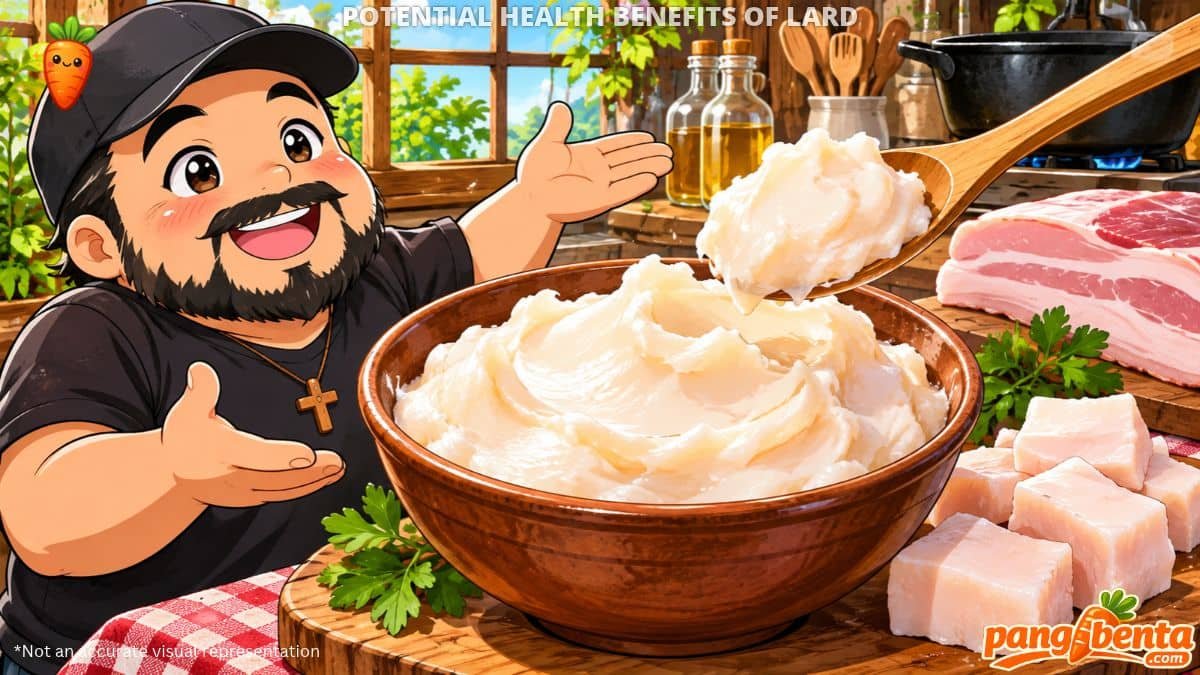
Lard is a type of animal fat obtained from pigs. It’s produced through a process called rendering, which involves gently heating pork fat until the liquid fat separates from the remaining tissue.
Once cooled, the rendered fat becomes a soft, creamy substance that’s typically white or slightly off-white.
Traditionally, lard has been used for frying, roasting, baking, and preparing various dishes. It’s particularly valued for producing flaky pastries, crispy fried foods, and rich flavors.
There are several common types of lard:
- Leaf lard: Rendered from fat surrounding a pig’s kidneys. It has a relatively mild flavor and is often preferred for baking.
- Back fat lard: Obtained from fat beneath the skin along the pig’s back. It’s commonly used for everyday cooking.
- Commercial lard: Sold in stores and may be refined, blended, or hydrogenated to improve texture and shelf life.
Plain, non-hydrogenated lard is generally preferable to partially hydrogenated varieties that may contain industrial trans fats.
📙 Potential Health Benefits of Lupin Flour
Nutritional Value of Lard
Before discussing its potential benefits, it’s important to understand what lard actually contains.
Unlike pork meat, lard consists almost entirely of fat. It contains virtually no protein, carbohydrates, or dietary fiber.
Here’s an approximate nutritional breakdown of one tablespoon (13 grams) of plain lard.
| Nutrient | Approximate Amount |
| Calories | 115–117 kcal |
| Total fat | 13 g |
| Saturated fat | 5.1 g |
| Monounsaturated fat | 5.9 g |
| Polyunsaturated fat | 1.5 g |
| Cholesterol | 12 mg |
| Carbohydrates | 0 g |
| Protein | 0 g |
These values are approximate and may vary depending on the pig’s diet, the source of the fat, and how the lard is processed.
One interesting detail is that lard generally contains more monounsaturated fat than saturated fat.
However, this doesn’t automatically make it heart-healthy. The type and proportion of fats we consume, along with our overall dietary pattern, determine their potential effects on cardiovascular health.
📙 Potential Health Benefits of Peasemeal
8 Potential Health Benefits of Lard
1. Provides Monounsaturated Fats
One of lard’s most notable nutritional characteristics is its monounsaturated fat content.
Approximately 45% of its total fat consists of monounsaturated fatty acids, primarily oleic acid.
Oleic acid is also the predominant fatty acid in olive oil, a major component of the Mediterranean diet.
Monounsaturated fats contribute to normal cell membrane function and provide energy for the body.
Research suggests that replacing saturated fats with unsaturated fats can help lower LDL cholesterol, often called bad cholesterol.
However, there’s an important distinction.
Although lard contains oleic acid, it also contains a considerable amount of saturated fat. Therefore, we shouldn’t assume that consuming lard provides the same cardiovascular benefits as consuming olive oil.
The potential benefit comes from its unsaturated fat content, but the overall nutritional composition remains important.
📙 Potential Health Benefits of Soy Flour
2. May Provide Vitamin D
Vitamin D plays an essential role in maintaining bone health, supporting normal muscle function, and regulating immune responses.
Interestingly, pork fat can contain vitamin D, and its concentration may be influenced by how pigs are raised and fed.
A 2017 study published in PLOS ONE investigated how sunlight exposure affected vitamin D concentrations in pork tissues.
Researchers found that sunlight exposure increased vitamin D concentrations in pork loin. In subcutaneous fat, it increased concentrations of 25-hydroxyvitamin D, although vitamin D3 concentrations did not increase significantly.
These findings suggest that pork fat can contain vitamin D compounds, but they don’t establish that ordinary servings of rendered lard provide meaningful amounts.
Vitamin D content can also vary with animal diet, sunlight exposure, and processing.
For this reason, I wouldn’t recommend relying on lard to meet daily vitamin D requirements.
Fatty fish, fortified foods, and supplements when medically appropriate are more dependable options.
📙 Potential Health Benefits of Chocolate Chip Cookies
3. Supplies Energy for Normal Body Functions
Dietary fat is an important source of energy, providing approximately nine calories per gram.
Because lard consists almost entirely of fat, even a small serving supplies a substantial amount of energy.
Our bodies need dietary fats for several functions, including:
- Providing energy for daily activities.
- Supporting cell membrane structure.
- Helping absorb fat-soluble vitamins.
- Supplying fatty acids involved in normal physiological processes.
Lard can contribute to these functions as part of a balanced diet.
However, these benefits aren’t unique to lard. Other dietary fats, including olive oil, nuts, seeds, and avocados, also provide energy and essential nutritional functions.
Because lard is calorie-dense, consuming too much can contribute to excessive calorie intake.
📙 Potential Health Benefits of Lentil Flour
4. Helps the Body Absorb Fat-Soluble Vitamins
Another useful property of lard is its ability to help the body absorb fat-soluble nutrients.
Vitamins A, D, E, and K require dietary fat for efficient absorption.
For example, adding a small amount of fat when preparing vegetables can improve the absorption of certain carotenoids, including beta-carotene.
Beta-carotene is a plant pigment that the body can convert into vitamin A, which supports normal vision, immune function, and cellular health.
Cooking vegetables with a little lard may therefore help improve the absorption of some nutrients.
However, lard doesn’t have a unique advantage in this regard.
Olive oil, canola oil, and other dietary fats can perform the same function, often with a more favorable fatty acid composition.
📙 Potential Health Benefits of Gram Flour
5. Offers Useful Heat Stability for Cooking
Lard has long been valued for its performance in cooking.
Its combination of saturated and monounsaturated fats makes it reasonably resistant to oxidation under appropriate cooking conditions.
Oxidation occurs when fats react with oxygen, particularly during prolonged heating. Excessive oxidation can produce compounds that affect the quality of cooking oils.
Because lard contains less polyunsaturated fat than some conventional vegetable oils, it can perform relatively well during certain high-temperature cooking applications.
Depending on its purity and processing, lard can be suitable for sautéing, roasting, and frying.
However, heat stability depends on several factors, including temperature, cooking duration, and repeated use.
It’s also worth noting that refined olive oil, high-oleic sunflower oil, and other appropriate cooking oils can provide excellent cooking stability.
Lard isn’t automatically the safest or healthiest option for frying.
Regardless of which cooking fat we use, avoiding excessive temperatures, smoking oil, and repeated deep-frying is a sensible practice.
📙 Potential Health Benefits of Custard Powder
6. Contains Virtually No Carbohydrates
For people following low-carbohydrate or ketogenic diets, lard has a practical advantage: it contains virtually no carbohydrates or sugar.
This means it can be used in meals without significantly increasing carbohydrate intake.
For example, lard can be used to cook eggs, vegetables, and other foods commonly included in low-carbohydrate diets.
However, being carbohydrate-free doesn’t necessarily make a food healthier.
Lard is still high in calories and saturated fat, and it doesn’t provide meaningful amounts of dietary fiber or many essential micronutrients.
Furthermore, low-carbohydrate diets aren’t automatically beneficial for cardiovascular health, especially when they rely heavily on saturated animal fats.
The overall quality of the diet remains more important than carbohydrate content alone.
📙 Potential Health Benefits of Clover Honey
7. May Improve Meal Satisfaction
Fat plays an important role in the flavor, texture, and overall enjoyment of food.
Lard can enhance the richness of certain dishes, improve the texture of baked goods, and help create crispy surfaces during cooking.
Dietary fat can also influence digestion and the release of hormones involved in feelings of fullness.
This means meals containing some fat may feel more satisfying than meals with very little fat.
However, there’s insufficient evidence that lard specifically promotes greater fullness or better weight management than other dietary fats.
Its high calorie content also means that excessive use can increase total energy intake.
The practical advantage is that using a modest amount of lard may improve the flavor and enjoyment of certain meals.
📙 Potential Wellness Benefits of Different Foods
8. Can Be Part of a Minimally Processed Diet
Traditionally rendered lard can be made through a relatively simple process involving pork fat and controlled heating.
When prepared without additives or hydrogenation, it can be a straightforward cooking ingredient.
For people who prefer cooking with basic ingredients, plain rendered lard may be an appealing option.
However, minimal processing doesn’t automatically make a food healthier.
Many plant-based cooking oils undergo processing yet have substantial scientific evidence supporting their use in heart-healthy diets.
The main advantage of plain lard is its simple ingredient composition rather than any proven health benefit associated with minimal processing.
Is Lard Healthier Than Butter or Olive Oil?
This is an important question because not all dietary fats have the same nutritional composition.
Although lard contains both saturated and unsaturated fats, the proportions differ from those found in butter and olive oil.
Here’s an approximate comparison of their fatty acid profiles.
| Cooking Fat | Saturated Fat | Monounsaturated Fat | Polyunsaturated Fat |
| Lard | 39% | 45% | 11% |
| Butter | 51% | 21% | 3% |
| Olive oil | 14% | 73% | 11% |
Percentages are approximate proportions of total fat and may vary by product. The remaining proportions include other fatty acids.
Lard generally contains less saturated fat and more monounsaturated fat than butter.
From this perspective, it may offer a more favorable fatty acid profile than butter.
However, olive oil contains substantially less saturated fat and significantly more monounsaturated fat than lard.
Extra-virgin olive oil also provides plant compounds, including polyphenols, that may contribute to its cardiovascular benefits.
The American Heart Association recommends replacing saturated fats with unsaturated fats to help improve cholesterol levels and reduce cardiovascular risk.
Therefore, while lard may occasionally be used instead of butter, olive oil and other unsaturated plant oils remain preferable choices for everyday heart-healthy cooking.
Potential Health Risks of Eating Too Much Lard
Although lard has some useful nutritional properties, excessive consumption may have disadvantages.
1. May Increase LDL Cholesterol
One tablespoon of lard contains approximately five grams of saturated fat.
Regularly consuming too much saturated fat can increase LDL cholesterol, which contributes to the development of atherosclerosis.
This is particularly important for individuals with elevated cholesterol or existing cardiovascular risk factors.
2. May Contribute to Weight Gain
One tablespoon of lard contains approximately 115 calories.
Adding large amounts to meals without adjusting overall calorie intake can contribute to an energy surplus.
Over time, consistently consuming more calories than the body uses may lead to weight gain.
Lard isn’t uniquely fattening, but its high calorie density makes portion control important.
3. May Reduce Overall Dietary Quality
Lard provides energy but relatively few essential nutrients compared with many whole foods.
If large quantities replace foods such as nuts, seeds, fatty fish, or nutrient-rich plant oils, overall dietary quality may suffer.
A balanced diet should provide adequate protein, fiber, vitamins, minerals, and essential fatty acids.
4. Can Deteriorate During Improper Storage or Heating
Like other cooking fats, lard can become rancid when exposed to excessive heat, oxygen, or light.
Repeated high-temperature heating may also promote the formation of undesirable oxidation products.
Proper storage, controlled cooking temperatures, and avoiding repeated frying can help maintain its quality.
How to Include Lard in a Balanced Diet
If you enjoy the flavor and cooking properties of lard, you don’t necessarily need to eliminate it completely.
Instead, I recommend treating it as an occasional cooking ingredient rather than your primary source of dietary fat.
Here are some practical ways to use it:
- Use modest portions. A teaspoon may be enough for certain cooking applications.
- Pair it with nutritious foods. Use small amounts when preparing vegetables, beans, or other wholesome ingredients.
- Choose non-hydrogenated lard. Check ingredient labels and avoid products containing partially hydrogenated fats.
- Avoid excessive frying. Consider sautéing or roasting instead of frequently deep-frying foods.
- Prioritize unsaturated fats. Use olive oil, canola oil, and other unsaturated plant oils for most everyday cooking.
- Monitor saturated fat intake. Remember that other foods, including butter, cheese, and fatty meats, also contribute saturated fat.
For perspective, the American Heart Association recommends keeping saturated fat below 6% of daily calories.
For someone consuming 2,000 calories daily, this is approximately 13 grams of saturated fat.
Since one tablespoon of lard contains about five grams, it can account for a substantial portion of that amount.
Individual nutritional requirements vary, so people with high cholesterol, cardiovascular disease, or other medical conditions may benefit from personalized dietary guidance.
Frequently Asked Questions (FAQ)
1. Is lard actually healthy?
Lard contains monounsaturated fats and can fit into a balanced diet when consumed in moderation. However, it also contains substantial saturated fat and calories. Its nutritional properties don’t make it inherently healthier than unsaturated plant oils.
2. Is lard healthier than vegetable oil?
Generally, no. Many commonly used vegetable oils, including olive, canola, and soybean oil, contain more unsaturated fat and less saturated fat than lard. Replacing saturated fats with unsaturated plant oils is supported by stronger cardiovascular evidence.
3. Does lard contain vitamin D?
Lard may contain vitamin D, depending on the source of the pork fat and processing methods. However, amounts vary, and typical servings shouldn’t be relied upon to meet vitamin D requirements.
4. Does lard raise cholesterol?
Lard can contribute to increased LDL cholesterol because it contains saturated fat. Its effects depend on the quantity consumed, the foods it replaces, and the individual’s overall dietary pattern.
5. Is lard good for frying?
Lard can be suitable for frying because of its cooking characteristics and fatty acid composition. However, it should not be overheated or repeatedly reused. Other cooking oils may offer similar heat stability with less saturated fat.
6. Can I eat lard every day?
Small amounts can fit into some balanced diets, provided overall saturated fat intake remains within recommended limits. However, unsaturated plant oils are generally better choices for routine daily cooking.
7. Is lard good for weight loss?
There’s no convincing evidence that lard promotes weight loss or burns body fat. Although dietary fat can contribute to meal satisfaction, lard is calorie-dense. Weight management depends primarily on overall energy balance, dietary quality, and sustainable lifestyle habits.
8. Is lard inflammatory or anti-inflammatory?
There’s insufficient direct clinical evidence to classify lard as an anti-inflammatory food or establish that moderate lard consumption independently causes inflammation. Its effects depend on dietary context and overall health. Lard has not been shown to prevent or treat inflammatory conditions such as arthritis.
9. Is homemade lard healthier than store-bought lard?
Homemade lard allows greater control over ingredients and preparation. However, plain, non-hydrogenated commercial lard can have a similar nutritional composition. Neither is automatically healthier, and both require proper handling and storage.
10. Is lard healthier than coconut oil?
Lard generally contains less saturated fat and more monounsaturated fat than coconut oil. However, neither is the preferred everyday fat for cardiovascular health. Olive oil and other unsaturated plant oils have stronger evidence supporting heart health.
Final Thoughts: Should You Include Lard in Your Diet?
After examining lard’s nutritional composition and potential benefits, I think it’s reasonable to say that this traditional cooking fat deserves a more balanced reputation.
Lard isn’t composed entirely of saturated fat. It contains a meaningful amount of monounsaturated fat, may provide vitamin D, and offers useful properties for cooking.
However, we also need to recognize its limitations.
Lard remains high in calories and saturated fat, and there’s limited direct clinical evidence showing that consuming it improves long-term health outcomes.
For me, the most sensible approach is to view lard as an optional cooking ingredient that can be enjoyed occasionally as part of a nutritious, balanced diet.
There’s no need to consider it a miracle food, but occasional consumption doesn’t automatically make a diet unhealthy either.
Ultimately, good nutrition isn’t about finding one perfect cooking fat. It’s about choosing a variety of nutritious foods, prioritizing unsaturated fats, managing portions, and maintaining healthy eating habits over time.
Content Disclaimer
This article is intended for informational and educational purposes only and does not constitute medical advice, diagnosis, or treatment. The potential nutritional benefits discussed are based on available scientific evidence, including research on individual fatty acids and dietary fats, and should not be interpreted as proof that consuming lard directly improves health outcomes.
Individuals with high cholesterol, cardiovascular disease, obesity, or other medical conditions should consult a qualified healthcare professional or registered dietitian before making significant dietary changes. Nutritional values and health effects may vary depending on the source, processing, preparation, and amount of lard consumed.