

Cookies probably aren’t the first food that comes to mind when you think about healthy eating. They’re usually associated with dessert, celebrations, afternoon snacks, or simply satisfying a sweet tooth.
But does that mean cookies have no nutritional value?
Not necessarily.
The nutritional value of a cookie depends heavily on its ingredients. A traditional cookie made primarily from refined flour, sugar, and butter may provide relatively few essential nutrients for its calorie content. On the other hand, cookies made with ingredients such as oats, whole grains, nuts, seeds, fruit, and cocoa can provide fiber, protein, unsaturated fats, vitamins, minerals, and beneficial plant compounds.
That doesn’t turn cookies into a health food. It simply means there’s more nuance to them than saying all cookies are unhealthy.
So, let’s take a closer look at the potential nutritional benefits of cookies and, just as importantly, their limitations.
Key Takeaways
- The nutritional value of cookies varies considerably depending on their ingredients.
- Cookies provide carbohydrates and calories, making them a readily available source of energy.
- Oats, whole grains, nuts, seeds, fruit, and cocoa can add fiber, protein, unsaturated fats, minerals, and beneficial plant compounds.
- Cookies can contribute nutrients to your diet, but they’re generally not the best foods to rely on for those nutrients.
- Gluten-free cookies can provide an enjoyable option for people who need to avoid gluten, but gluten-free doesn’t automatically mean healthier.
- Cookies containing nutritious ingredients can still contain substantial amounts of added sugar, saturated fat, and calories.
- Portion size, frequency, ingredients, and your overall eating pattern matter more than whether an individual food is labeled “healthy” or “unhealthy.”
What Are Cookies?
Cookies are small baked foods typically made from some combination of flour, sugar, and fat, along with ingredients such as eggs, chocolate, nuts, oats, dried fruit, spices, or flavorings.
The word “cookie” comes from the Dutch word koekje, meaning “little cake.” Cookie-like baked foods, however, have a long and complicated history, so it’s difficult to attribute the modern cookie to a single place or period.
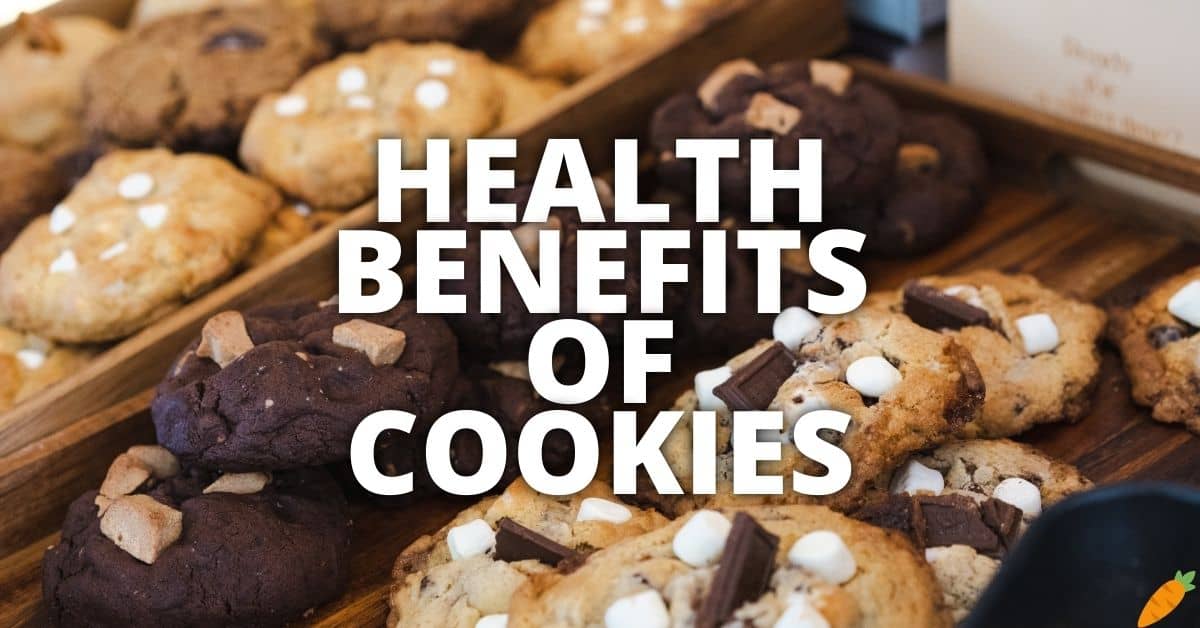
Today, cookies come in countless varieties. They can be soft and chewy, thin and crisp, filled, frosted, spiced, chocolate-covered, or packed with nuts and fruit.
And those differences aren’t just about taste. They can make a considerable difference nutritionally.
📙 Potential Health Benefits of Ceremonial Cacao
1. Cookies Can Provide Quick Energy
One of the clearest nutritional characteristics of cookies is their carbohydrate content.
Carbohydrates are an important source of energy for the body. During digestion, digestible carbohydrates are broken down into glucose, which cells can use for energy.
Because many cookies contain refined flour and added sugar, their carbohydrates can be digested relatively quickly. This makes cookies a convenient source of calories and carbohydrates when quick energy is useful.
Cookies are also portable and easy to store, which can make them a convenient snack.
But there’s an important distinction between providing energy and providing optimal nutrition.
Fruit, whole grains, legumes, and other nutrient-dense carbohydrate sources generally provide more fiber, vitamins, minerals, and other beneficial compounds. A cookie can provide energy, but that alone doesn’t make it a particularly nutritious source of carbohydrates.
📙 Potential Health Benefits of Chocolate Ice Cream
2. Some Cookies Can Contribute Fiber
The amount of fiber in a cookie depends largely on the ingredients used.
Cookies containing oats, whole-grain flour, bran, nuts, seeds, or dried fruit may contain more fiber than cookies made primarily with refined flour.
Dietary fiber supports normal digestive function and can help with bowel regularity. Different types of fiber have different effects in the body, and fiber-rich dietary patterns are associated with several health benefits.
This doesn’t mean that eating an oatmeal cookie provides the same nutritional benefits as eating a bowl of oatmeal.
The amount of each ingredient matters.
If a cookie contains only a small quantity of oats but substantial amounts of refined flour and added sugar, its fiber content may still be fairly low.
If you’re buying packaged cookies and fiber matters to you, check the Nutrition Facts label rather than relying only on words such as “oatmeal,” “whole grain,” or “multigrain” on the front of the package.
📙 Potential Health Benefits of Chocolate Cake
3. Nuts and Seeds Can Add Protein and Unsaturated Fats
Adding nuts and seeds can improve a cookie’s nutritional profile.
Almonds, peanuts, walnuts, pistachios, sunflower seeds, chia seeds, and flaxseeds can contribute protein, fiber, minerals, and unsaturated fats.
Protein is needed for maintaining and repairing body tissues and performing numerous other functions throughout the body. Protein and fiber may also help make a snack more satisfying.
Nuts and seeds can provide monounsaturated and polyunsaturated fats as well. Certain ingredients, including walnuts, chia seeds, and flaxseed, also provide alpha-linolenic acid (ALA), a plant-based omega-3 fatty acid.
The type of fat used in the cookie itself matters too.
Oils higher in unsaturated fats, such as olive, canola, sunflower, soybean, and peanut oils, are generally preferable to fats containing larger amounts of saturated fat when considering cardiovascular health.
Coconut oil, despite sometimes being marketed as a healthy oil, is high in saturated fat. It shouldn’t automatically be grouped with oils that are predominantly unsaturated.
Nuts and seeds are also calorie-dense, and adding them doesn’t cancel out the added sugar or saturated fat that may be present elsewhere in a cookie.
📙 Potential Health Benefits of Tempeh
4. Cocoa, Fruit, Nuts, and Spices Can Provide Beneficial Plant Compounds
One of the more interesting nutritional features of certain cookies comes from their plant-based ingredients.
Cocoa, dark chocolate, berries, dried fruit, nuts, and spices such as cinnamon contain various naturally occurring plant compounds, including polyphenols. Many of these compounds have antioxidant activity.
Antioxidants help protect cells against oxidative damage, but the relationship between dietary antioxidants and long-term health is complicated. Simply eating a food containing antioxidants doesn’t mean that the food will prevent disease or provide a measurable health benefit by itself.
That’s why I wouldn’t eat cookies specifically to obtain antioxidants.
Whole fruits, vegetables, nuts, seeds, legumes, and other plant foods generally provide these compounds along with a broader range of nutrients.
Still, if I’m going to enjoy a cookie anyway, ingredients such as cocoa, nuts, seeds, and fruit can add nutritional value.
And since chocolate chip cookies happen to be my favorite, I’ll happily take that bonus.
📙 Potential Health Benefits of Dulce de Leche
5. Cookies Can Supply Some Vitamins and Minerals
Depending on the recipe, cookies can contribute small amounts of several essential nutrients.
Enriched or fortified flour, for example, may provide nutrients such as iron and certain B vitamins. Nuts and seeds can contribute magnesium, copper, manganese, and other minerals. Dairy ingredients may provide some calcium, while dried fruit can contribute potassium and other micronutrients.
Again, the amount matters.
Finding calcium in a cookie doesn’t make it nutritionally equivalent to a food that’s naturally rich in calcium, just as finding iron in a cookie doesn’t necessarily make it a good way to address an iron deficiency.
It’s better to think of these nutrients as possible contributions to your overall intake rather than reasons to eat more cookies.
📙 Potential Health Benefits of Caramel
6. Cookies Can Be Enjoyable, and Enjoyment Matters
Nutrition isn’t only about maximizing the amount of vitamins and minerals in every bite of food.
Food is also connected to enjoyment, family, culture, traditions, celebrations, and memories.
A favorite cookie may remind you of childhood, holidays, baking with family members, or simply relaxing with a cup of coffee or tea.
Allowing room for foods you enjoy can be compatible with an overall nutritious eating pattern.
That doesn’t mean cookies are necessary for good mental health, nor should food be the only strategy we use to manage stress or difficult emotions. But we also don’t need to treat every enjoyable food as something to feel guilty about.
Sometimes a cookie is simply something delicious, and that’s a perfectly reasonable reason to enjoy one.
📙 Potential Health Benefits of Biltong
7. Gluten-Free Cookies Provide an Option for People Who Avoid Gluten
For people with celiac disease or certain other conditions requiring gluten avoidance, gluten-free cookies can make baked treats more accessible.
They may be made with ingredients such as almond flour, rice flour, buckwheat, coconut flour, or gluten-free oats instead of conventional wheat flour.
However, there’s an important distinction:
Gluten-free does not automatically mean healthier.
A gluten-free cookie can contain just as much, or sometimes more, added sugar, saturated fat, and calories as a conventional cookie.
People with celiac disease also need to consider gluten cross-contact. Oats themselves don’t contain gluten, but they can come into contact with wheat, rye, or barley during growing, transportation, storage, processing, or manufacturing.
If you medically need to avoid gluten, carefully checking labels and choosing products appropriate for your condition is more important than assuming that a product is safe simply because its main ingredients are naturally gluten-free.
📙 Likely Health Benefits of Different Foods
How to Choose a More Nutritious Cookie
If you enjoy cookies and would like to get a little more nutritional value from them, you don’t have to reinvent dessert.
Start with the ingredients.
Look for cookies, or recipes, that use meaningful amounts of oats or whole grains. Nuts and seeds can add protein, fiber, minerals, and unsaturated fats. Cocoa, fruit, and spices can provide additional plant compounds.
It’s also worth checking added sugar, saturated fat, fiber, calories, and serving size on packaged cookies.
Most importantly, don’t let a single nutritious ingredient create a health halo around the entire product.
An oatmeal cookie can still contain a lot of added sugar. A cookie containing walnuts can still be high in saturated fat. And a gluten-free cookie can still be high in calories and added sugar.
The entire nutritional profile matters.
You can also make simple changes when baking cookies at home. Depending on the recipe, you might replace some refined flour with whole-grain flour or oats, add nuts or seeds, use less added sugar, or choose fats higher in unsaturated fatty acids.
Just remember that a more nutritious cookie is still a cookie, and there’s nothing wrong with that.
What Cookies Can’t Do
This may be the most important part of the discussion.
Adding nutritious ingredients to cookies doesn’t transform them into medicine.
Cookies shouldn’t be relied upon to prevent heart disease, treat inflammation, strengthen bones, correct nutrient deficiencies, control blood sugar, or manage chronic medical conditions.
The health benefits associated with whole grains, nuts, seeds, fruits, and other nutritious foods generally come from eating them regularly as part of an overall healthy dietary pattern, not simply from adding small amounts of them to desserts.
This distinction is particularly important when discussing antioxidants and inflammation.
I have a personal interest in antioxidant-containing foods because of the relationship between oxidative stress, inflammation, and health. But I wouldn’t expect the antioxidants in a chocolate cookie to treat arthritis or another inflammatory condition.
I’d consider them a nutritional extra rather than a therapy.
The Bottom Line
So, can cookies have health benefits?
In a limited sense, yes, but potential nutritional benefits is probably the more accurate description.
Depending on their ingredients, cookies can contribute carbohydrates, fiber, protein, unsaturated fats, vitamins, minerals, and beneficial plant compounds.
But you don’t need to turn cookies into a health food to justify eating them.
A cookie can simply be an enjoyable part of an otherwise nutritious diet.
For me, chocolate chip cookies remain the winner. If they contain good-quality cocoa or dark chocolate, nuts, oats, or other nutritious ingredients, that’s an added benefit.
But ultimately, I eat a cookie because I enjoy it, not because I expect it to prevent disease or treat a health condition.
And I think that’s a sensible way to look at cookies.
Frequently Asked Questions
1. Are cookies healthy?
It depends on what you mean by “healthy.”
Most conventional cookies are treats that can be relatively high in added sugar, refined carbohydrates, saturated fat, and calories. However, cookies containing ingredients such as oats, whole grains, nuts, seeds, fruit, and cocoa can provide useful nutrients.
It’s better to evaluate a cookie’s ingredients, nutritional profile, portion size, and place in your overall diet than to label all cookies as either healthy or unhealthy.
2. Can I eat cookies every day?
Cookies can potentially fit into a nutritious diet, even regularly, depending on your portion size, energy needs, health conditions, and overall eating pattern.
Frequency isn’t the only consideration. Quantity and the rest of your diet matter too.
3. Are oatmeal cookies healthier than regular cookies?
Sometimes, but not automatically.
Oats can add fiber and nutrients, but an oatmeal cookie can still contain substantial amounts of added sugar and saturated fat. Check the entire recipe or Nutrition Facts label rather than assuming it’s healthier simply because it contains oats.
4. Are homemade cookies healthier?
They can be, because you have greater control over the ingredients and portions.
You might use more oats or whole grains, add nuts and seeds, reduce the amount of added sugar, or choose fats higher in unsaturated fatty acids.
However, homemade doesn’t automatically mean nutritious. A homemade cookie can still contain plenty of sugar, saturated fat, and calories.
5. Are gluten-free cookies healthier?
Not necessarily.
Gluten-free foods are important for people who medically need to avoid gluten, but removing gluten doesn’t automatically improve a cookie’s nutritional quality.
For people who don’t need to avoid gluten, a gluten-free label by itself isn’t a good reason to consider a cookie healthier.
6. Do chocolate cookies contain antioxidants?
Cocoa and dark chocolate contain polyphenols and other compounds with antioxidant activity. The amount in an individual cookie depends on the type and quantity of chocolate or cocoa used.
That doesn’t mean chocolate cookies should be treated as an important source of antioxidants. Fruits, vegetables, nuts, seeds, legumes, and other plant foods generally provide greater overall nutritional value.
7. Can cookies help with inflammation or arthritis?
Cookies shouldn’t be used to treat arthritis or chronic inflammation.
Some ingredients found in cookies, such as nuts, seeds, fruit, spices, and cocoa, contain plant compounds that are being studied for their effects on health. However, that doesn’t establish the cookie itself as an anti-inflammatory treatment.
Anyone managing arthritis or another chronic condition should focus on their overall dietary pattern and follow individualized advice from an appropriate healthcare professional.
8. What’s the healthiest type of cookie?
There isn’t one universally “healthiest” cookie.
If nutrition is your priority, look for a cookie with a reasonable portion size and ingredients such as oats or whole grains, nuts, seeds, fruit, or cocoa. Compare its fiber, added sugar, saturated fat, and calorie content with other options.
And remember: dessert doesn’t have to be nutritionally perfect. Sometimes the cookie you enjoy most, in a reasonable portion, is the better choice.
Content Disclaimer
This article is intended for general informational and educational purposes only. It is not medical advice and should not be used to diagnose, treat, cure, or prevent any disease or medical condition.
Nutritional needs vary according to factors such as age, activity level, medications, allergies, dietary restrictions, and existing health conditions. People with diabetes, celiac disease, food allergies, cardiovascular disease, or other conditions that affect dietary choices may require individualized guidance.
If you have a medical condition or are considering significant dietary changes, consult a qualified healthcare professional or registered dietitian who can provide advice appropriate to your individual circumstances.
The nutritional value of cookies varies widely by recipe, ingredients, brand, preparation method, and serving size. References to potentially beneficial ingredients should not be interpreted as evidence that cookies themselves prevent or treat disease.
Your overall dietary pattern matters far more to long-term health than the nutritional characteristics of any single food.