

Chico is sweet, juicy, and surprisingly nutritious. But beyond its distinctive flavor, what can this tropical fruit actually offer your health?
Chico (Manilkara zapota), also known as sapodilla, is native to Central America and is now cultivated in many tropical regions, including Southeast Asia.
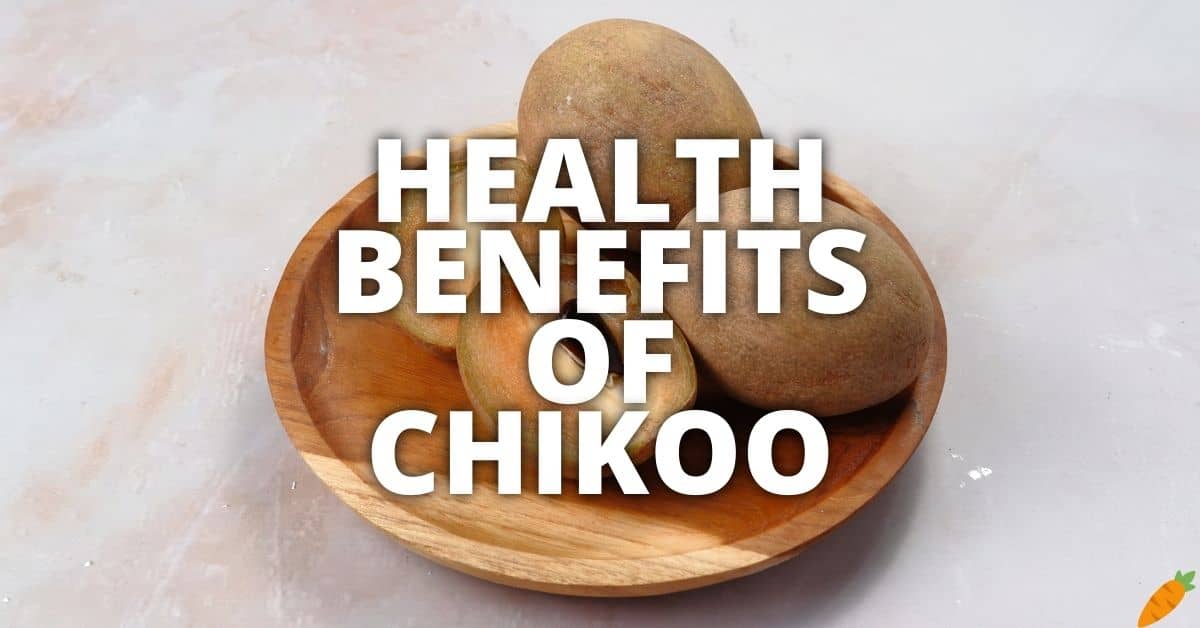
If you’ve eaten ripe chico before, you’ll probably remember its soft, slightly grainy flesh and rich sweetness, which is sometimes compared to brown sugar, caramel, or ripe pear.
Chico provides carbohydrates, dietary fiber, vitamin C, potassium, and smaller amounts of several other vitamins and minerals. It also contains naturally occurring plant compounds, including polyphenols, that researchers are studying for their potential health effects.
Some of chico’s proposed benefits are well supported by what we know about its nutrients, while others are based mainly on laboratory, animal, or preliminary human research. Keeping that distinction in mind can help us appreciate chico without exaggerating what this fruit can do.
Key Takeaways
- Chico is a good source of dietary fiber, which supports healthy digestion and regular bowel movements.
- It provides carbohydrates for energy along with vitamin C, potassium, and other micronutrients.
- Its fiber may help promote fullness and can be useful as part of a balanced approach to weight management.
- Chico contains polyphenols and other plant compounds with antioxidant properties.
- Laboratory and animal research suggests potential anti-inflammatory and other biological effects, but these findings do not prove that eating chico can prevent or treat disease.
- Chico is naturally sweet and contains a meaningful amount of carbohydrate, so portion size may matter for people who need to manage their carbohydrate or blood sugar intake.
- Chico is best enjoyed as part of a varied, balanced diet rather than used as a treatment for a medical condition.
1. Good Source of Dietary Fiber
One of chico’s nutritional strengths is its fiber content.
Dietary fiber supports normal digestive function by adding bulk to stool and helping maintain regular bowel movements. Getting enough fiber can also help prevent constipation.
Fiber has benefits beyond digestive health. Diets rich in fiber are associated with better cardiovascular and metabolic health, and fiber-rich foods can help you feel full after eating.
Chico isn’t a treatment for digestive or metabolic conditions, but it can be one of several fruits that help you meet your daily fiber needs.
📙 Potential Health Benefits of Cashew Apple
2. Supports Normal Immune Function
Chico contains vitamin C, an essential nutrient involved in several important processes throughout the body.
Vitamin C supports the normal function of the immune system and acts as an antioxidant, helping protect cells against oxidative damage. It’s also required for collagen formation and helps the body absorb iron from plant foods.
However, eating chico won’t make you immune to colds or other infections.
It’s better to think of chico as one of many fruits and vegetables that can contribute vitamin C and other nutrients to a healthy diet.
📙 Potential Health Benefits of Sumo Oranges
3. Provides Important Minerals
Chico supplies several essential minerals, particularly potassium, along with smaller amounts of calcium, phosphorus, magnesium, and iron.
These minerals perform different functions throughout the body. Potassium is important for normal nerve and muscle function and helps regulate fluid balance. Calcium and phosphorus contribute to maintaining normal bones and teeth, while iron is needed for the formation of hemoglobin, which carries oxygen in the blood.
That doesn’t mean chico alone will strengthen your bones or prevent mineral deficiencies.
Instead, its mineral content adds to its overall nutritional value and can contribute to your intake as part of a varied diet.
📙 Potential Health Benefits of Siniguelas
4. Provides Energy
Much of the sweetness of ripe chico comes from naturally occurring carbohydrates, including sugars.
Carbohydrates are one of the body’s primary energy sources, so chico can provide readily available fuel as part of a meal or snack.
Whole chico also provides fiber, vitamins, minerals, and plant compounds, which distinguishes it nutritionally from foods and drinks that mainly provide added sugars.
Still, naturally occurring sugar is still sugar from a metabolic standpoint.
If you need to monitor your carbohydrate intake or blood glucose, it’s sensible to consider your portion size and what else you’re eating with the fruit.
📙 Potential Health Benefits of Finger Limes
5. Provides Nutrients Important for Eye and Skin Health
Chico contains small amounts of vitamin A and carotenoids as well as vitamin C and other plant compounds.
Vitamin A is essential for normal vision and helps maintain healthy tissues, including the skin. Vitamin C is necessary for normal collagen formation and contributes to the protection of cells from oxidative stress.
These are established functions of the nutrients themselves, but that doesn’t mean eating chico will improve your eyesight or make your skin look younger.
Instead, chico can contribute some of the nutrients your body requires to maintain normal vision, skin, and other tissues.
📙 Potential Health Benefits of Fuji Apples
6. Contains Antioxidant Plant Compounds
Chico contains several naturally occurring plant compounds, including phenolic acids and flavonoids.
Researchers have identified compounds such as gallic acid, catechin, epicatechin, quercetin, and other polyphenols in different parts of the sapodilla plant.
These compounds have demonstrated antioxidant activity in laboratory studies.
Antioxidants can interact with reactive molecules known as free radicals. When the production of these reactive molecules overwhelms the body’s antioxidant defenses, oxidative stress can occur and potentially damage cells.
However, laboratory antioxidant activity shouldn’t be confused with proven disease prevention in people.
The fact that sapodilla extracts can demonstrate antioxidant effects in experimental conditions does not establish that eating chico will prevent cancer, heart disease, or other illnesses.
Still, chico can contribute antioxidant compounds as part of a diet rich in fruits, vegetables, and other plant foods.
📙 Potential Health Benefits of Unripe Plantain
7. May Help Promote Fullness
If you’re managing your weight, chico can still fit into a balanced diet.
Its fiber content may help promote satiety, or the feeling of fullness after eating. Foods that help you feel satisfied can make it easier to manage hunger and overall food intake.
However, chico isn’t a weight-loss food in the sense that eating it directly causes you to lose weight.
It’s also a relatively sweet fruit, so portion size still matters.
Long-term weight management depends much more on your overall eating pattern, energy intake, physical activity, sleep, and other lifestyle factors than on any individual food.
📙 Potential Health Benefits of Dried Bananas
8. May Have Anti-Inflammatory Properties
Chico contains phytochemicals such as phenolic compounds, flavonoids, and tannins that have attracted scientific interest for their potential anti-inflammatory effects.
Laboratory and animal studies involving extracts from different parts of Manilkara zapota have reported anti-inflammatory activity. There has also been limited preliminary human research investigating sapodilla consumption and markers related to oxidative stress and inflammation.
However, the evidence isn’t strong enough to conclude that eating chico produces clinically meaningful anti-inflammatory effects in humans.
In particular, there isn’t sufficient evidence to recommend chico as a treatment for arthritis, inflammatory bowel disease, or other inflammatory conditions.
Chico can certainly be included among the many plant foods in a balanced diet, but it shouldn’t replace appropriate medical treatment.
📙 Promising Wellness Benefits of Different Fruits
9. Has a History of Traditional Medicinal Use
Different parts of the sapodilla tree have a history of use in traditional medicine.
Traditional preparations involving the fruit, leaves, bark, seeds, and other parts of the plant have been used for various purposes, including digestive and respiratory complaints.
These traditional uses have helped generate scientific interest in Manilkara zapota and its phytochemicals.
However, traditional use isn’t the same as scientifically demonstrated effectiveness.
Modern research has identified numerous biologically active compounds in the plant, and laboratory and animal studies have investigated antioxidant, anti-inflammatory, antimicrobial, glucose-related, and other potential effects.
Much more human research is needed before many of these proposed medicinal effects can be considered established.
For now, ripe chico is best regarded as a nutritious food rather than a natural medicine.
What Does the Research Really Say About Chico?
When discussing chico’s health benefits, it’s helpful to distinguish between nutritional evidence and pharmacological research.
We know that the edible fruit provides dietary fiber, carbohydrates, vitamin C, potassium, and various other nutrients and phytochemicals. These nutritional characteristics can contribute to a healthy diet.
Researchers have also investigated extracts made from the fruit and other parts of the sapodilla plant.
Studies have reported antioxidant, anti-inflammatory, antimicrobial, glucose-related, gastroprotective, and other biological activities. However, much of this research has been conducted in laboratory experiments or animals, often using concentrated extracts rather than the amounts of compounds you would get from eating the fruit.
Those findings are useful for identifying potential areas for future research, but they aren’t proof that eating chico will produce the same effects in people.
Human clinical research on sapodilla remains limited.
The most evidence-based way to look at chico, therefore, is as a nutritious tropical fruit that contains several potentially interesting plant compounds, not as a food proven to prevent or treat disease.
Are There Any Downsides to Eating Chico?
For most people, ripe chico can be enjoyed as part of a balanced diet.
However, there are a few things worth knowing.
Because ripe chico contains a meaningful amount of naturally occurring sugar and carbohydrates, people who need to manage their carbohydrate or blood glucose intake may want to be mindful of portion size.
Chico is also rich in fiber. That’s generally beneficial, but suddenly eating large amounts of fiber can cause bloating, gas, or other digestive discomfort in some people.
The fruit is best eaten when ripe. Unripe chico is hard and highly astringent and contains considerably more tannins and latex than ripe fruit.
The hard, black seeds are not normally eaten and should be removed before consuming the fruit.
If you have a medical condition requiring specific dietary restrictions, a doctor or registered dietitian can help determine how chico fits into your individual diet.
The Bottom Line
Chico doesn’t need to be a miracle fruit to be a worthwhile addition to your diet.
It’s naturally sweet, provides a good amount of dietary fiber, supplies carbohydrates and several micronutrients, and contains a variety of potentially beneficial plant compounds.
Its fiber supports normal digestive function and may help promote fullness, while nutrients such as vitamin C contribute to normal immune function and collagen formation.
Research into the antioxidant and anti-inflammatory properties of sapodilla is also promising, but much of the evidence remains preliminary or preclinical. More high-quality human studies are needed before chico can be said to prevent or treat particular diseases.
So, if you enjoy chico, there’s good reason to include it alongside other fruits as part of a varied, plant-rich diet.
Frequently Asked Questions
1. Is chico the same as sapodilla?
Yes. Chico is a common name for Manilkara zapota, a tropical fruit also known as sapodilla, chikoo, sapota, and chicozapote in different parts of the world.
2. Is chico high in fiber?
Chico is a good source of dietary fiber. The exact amount varies depending on the variety, ripeness, growing conditions, and nutritional database used, but published sources generally identify sapodilla as a fiber-rich fruit.
3. Is chico high in sugar?
Chico is naturally sweet and contains a meaningful amount of naturally occurring sugars and carbohydrates.
That doesn’t mean you necessarily need to avoid it. Whole chico also provides fiber and micronutrients, but portion size may be particularly important for people who need to manage their carbohydrate or blood glucose intake.
4. Is chico good for constipation?
Chico’s dietary fiber can support regular bowel movements and may help prevent constipation as part of a diet containing adequate fiber and fluids.
However, persistent, severe, or unexplained constipation can have many causes and may require medical evaluation.
5. Can chico help you lose weight?
There’s no good evidence that chico itself causes weight loss.
Its fiber may help promote fullness, which can be useful for managing appetite. However, long-term weight management depends on your overall eating pattern, energy balance, physical activity, sleep, and other factors.
6. Is chico anti-inflammatory?
Compounds found in Manilkara zapota have demonstrated anti-inflammatory activity in laboratory and animal studies, and limited preliminary human research has also been conducted.
However, there isn’t enough high-quality clinical evidence to establish that eating chico has a meaningful anti-inflammatory effect in humans.
7. Can chico help with arthritis?
There isn’t sufficient clinical evidence to recommend chico as a treatment for arthritis.
Although compounds and extracts from Manilkara zapota have attracted attention for their potential anti-inflammatory properties, this doesn’t establish that eating the fruit can reduce arthritis inflammation or pain.
Chico can be part of a balanced diet, but it shouldn’t replace appropriate arthritis treatment.
8. Can I eat chico every day?
Most healthy people can include ripe chico regularly as part of a balanced diet.
However, there’s no particular need to eat it every day. Eating a variety of fruits and vegetables can help provide a broader range of nutrients and plant compounds.
People who need to manage their carbohydrate or blood sugar intake may also want to consider portion size.
9. Is chico healthier than other fruits?
No single fruit is universally healthier than all others.
Chico stands out for its fiber and contains a variety of phytochemicals, while other fruits may provide larger amounts of particular vitamins, minerals, or plant compounds.
Rather than relying on one “superfruit,” aim to eat a variety of fruits and other plant foods.
Content Disclaimer
This article is intended for general informational and educational purposes only and is not a substitute for professional medical advice, diagnosis, or treatment.
Research into many of the proposed medicinal properties of Manilkara zapota is still preliminary. Findings from laboratory, animal, or concentrated-extract studies don’t necessarily demonstrate the same effects from eating the whole fruit in humans.
If you have diabetes or another medical condition, have food allergies, take medications, or follow a medically prescribed diet, consult a qualified healthcare professional or registered dietitian for advice appropriate to your individual circumstances.
Never stop, start, or change prescribed medical treatment based solely on information in this article.