
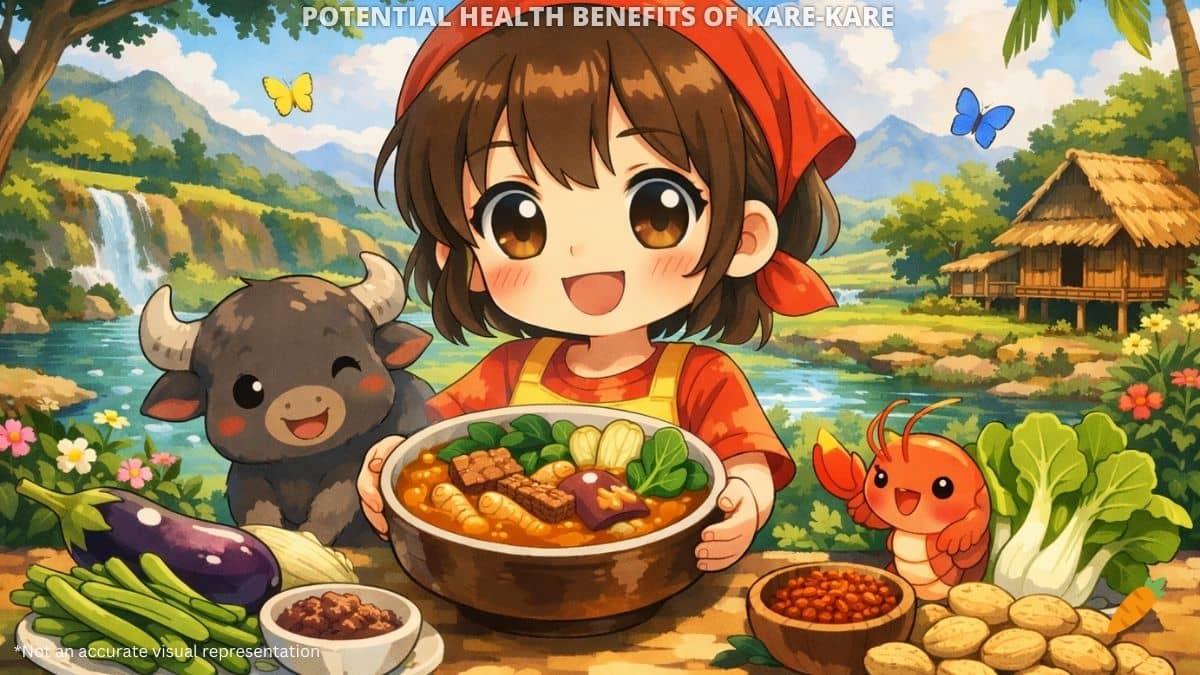
Kare-kare is a well-known Filipino dish made with peanut sauce, vegetables, and protein.
Many people enjoy it for its rich taste and filling texture.
Beyond flavor, the ingredients offer nutrients that support daily health when eaten in proper portions.
Balance matters because kare-kare can be high in calories if servings are too large.
Understanding the potential health benefits of kare-kare helps us make better meal choices.
1. Heart-Healthy Monounsaturated Fats From Peanut Sauce
Peanuts are a natural source of monounsaturated fats that support heart health.
These fats help manage cholesterol levels when they replace saturated fats in meals.
Peanut sauce also provides plant-based energy that keeps us full longer.
Using ground peanuts instead of peanut butter with added sugar improves quality.
Portion control matters because peanuts are still calorie-dense.
📙 Potential Health Benefits of Lechon
2. High-Fiber Vegetable Medley For Digestive Wellness
Kare-kare often includes vegetables like eggplant, string beans, and banana heart.
These foods supply fiber that supports smooth digestion.
Fiber helps prevent constipation and supports regular bowel movement.
A fiber-rich meal also helps us feel satisfied after eating.
Including more vegetables than meat keeps digestion lighter.
📙 Potential Health Benefits of Sinigang Na Hipon (Shrimp Sinigang)
3. Brain-Protecting Antioxidants Found In Eggplant Skin
Eggplant skin contains antioxidants that protect cells from damage.
These antioxidants help reduce stress inside the body that can affect brain health.
Keeping the skin on during cooking helps retain these benefits.
Eggplant also adds bulk without many calories.
This makes kare-kare filling without relying only on meat.
📙 Potential Health Benefits of Sinigang Na Baboy (Pork Sinigang)
4. Immune-Boosting Vitamins From Leafy Bok Choy
Bok choy provides vitamins like vitamin C that support immune defense and daily health.
These nutrients help the body respond to everyday germs and recover from minor stress.
Bok choy is also a good source of potassium, which helps support normal muscle and nerve function.
It contains calcium that plays a role in bone support and proper movement.
Leafy greens like bok choy support tissue repair and help the body stay strong over time.
Adding bok choy increases meal volume without adding heavy calories or excess fat.
Its mild taste blends well with rich sauces and proteins.
Fresh greens help balance heavier ingredients and improve the overall nutrition of the dish.
📙 Potential Health Benefits of Adobong Baboy (Pork Adobo)
5. Blood-Sugar-Regulating Properties Of Banana Heart
Banana heart is rich in fiber and plant compounds.
Fiber slows digestion and helps manage blood sugar levels.
This can reduce sudden spikes after eating.
Banana heart also adds texture that replaces some heavier ingredients.
Including it supports steadier energy throughout the day.
📙 Potential Health Benefits of Adobong Manok (Chicken Adobo)
6. Anti-Inflammatory Natural Coloring From Annatto Seeds
Annatto seeds give kare-kare its orange color using natural compounds.
These compounds are linked to reduced inflammation in the body.
Using annatto avoids artificial coloring and keeps the dish traditional.
Inflammation control supports joint comfort and general wellness.
Small amounts are enough to provide color and flavor.
📙 Potential Health Benefits of Nachos
7. Bone-Strengthening Minerals In Fresh String Beans
String beans contain minerals that support bone structure.
These nutrients help maintain strength as we age.
Crunchy beans also encourage chewing, which slows eating.
Slower eating supports better digestion and portion control.
Fresh beans add texture without adding fat.
📙 Potential Health Benefits of Arroz Caldo
8. Gut-Friendly Probiotic Potential Of Fermented Shrimp Paste
Fermented shrimp paste comes from a natural aging process.
Fermentation may introduce helpful bacteria for gut balance.
Eating it in small amounts supports digestion without excess salt.
Pairing it with fiber-rich vegetables improves gut comfort.
Moderation is key because shrimp paste is strong in flavor and sodium.
📙 Likely Health Benefits of Different Dishes
9. Enhanced Nutrient Absorption Through Healthy Fat Pairing
Fats in peanut sauce help the body absorb vitamins from vegetables.
Some vitamins need fat to be used properly.
This makes the combination of peanuts and vegetables useful.
Balanced fat intake supports steady energy.
Too much oil should still be avoided.
10. Lean Protein Adaptability For Customizable Dietary Needs
Kare-kare is a traditional stew that can be prepared with many types of lean protein.
Lean beef, seafood, or plant-based protein can be used based on personal needs.
This flexibility helps the dish fit different health goals and eating styles.
Lean protein supports muscle repair and helps maintain strength.
Choosing lean cuts also reduces saturated fat intake.
Using lighter protein options keeps the stew filling without making it too heavy.
Smart protein choices improve the overall nutrition while preserving the dish’s rich flavor.
💡 Conclusion
Kare-kare offers nutrition when prepared with care and balance.
Its vegetables, peanuts, and flexible protein choices work together to support health.
Portion size and ingredient quality remain important.
By understanding the potential health benefits of kare-kare, we can enjoy it more mindfully.
A thoughtful approach allows us to enjoy tradition while supporting wellness.
⛑️ Safety First
Kare-kare may offer potential health benefits, but these benefits are not guaranteed for everyone.
Some people, such as those with peanut allergies, shellfish allergies, or strict sodium limits, should avoid or limit this dish.
People with kidney issues, gout, or blood sugar concerns may also need to be careful with portion size and ingredients.
Many of the potential health benefits of kare-kare are based on general nutrition knowledge, anecdotal evidence, or food-based theories rather than strong medical proof.
It is important to research these claims and not rely on them as medical advice.
Before adding kare-kare to your regular diet, it is best to talk with a doctor or a qualified health professional for guidance.
⚠️ Content Disclaimer
This content is for general information only and is not meant to give medical advice.
You may treat this article for entertainment purposes and basic learning.
The information shared does not replace guidance from a doctor or other health professional.
Health needs and reactions to food can differ from person to person.
Always seek advice from a qualified professional before making changes to your diet or health routine.
❓ FAQs
1. Is kare-kare healthy to eat regularly?
Kare-kare can be part of a healthy diet when eaten in moderation.
It contains vegetables, protein, and healthy fats that support daily nutrition.
The key is portion size because the peanut sauce is calorie-dense.
Eating it occasionally and balancing it with lighter meals is a smart approach.
2. Can kare-kare be eaten by people watching their weight?
People watching their weight can still enjoy kare-kare with adjustments.
Using more vegetables and lean protein helps lower calories.
Smaller servings of peanut sauce also make a difference.
Paying attention to portions supports better weight control.
3. Is kare-kare suitable for people with blood sugar concerns?
Kare-kare may affect blood sugar due to its peanut sauce and serving size.
The vegetables and fiber can help slow sugar absorption.
Choosing lean protein and avoiding large portions may help reduce spikes.
Anyone with blood sugar issues should monitor their response carefully.
4. Can kare-kare be made healthier at home?
Kare-kare is easier to control when prepared at home.
Using natural ground peanuts, less oil, and more vegetables improves nutrition.
Lean meats or plant protein reduce excess fat.
Home cooking allows better balance and ingredient quality.
5. Who should be careful when eating kare-kare?
People with peanut allergies should avoid kare-kare completely.
Those with shellfish allergies need caution because of shrimp paste.
Individuals with gout, kidney issues, or sodium limits should watch portions.
Talking with a doctor helps ensure it fits personal health needs.