If you’re looking for a simple way to add more vegetables and fermented foods to your diet, curtido is worth trying. This traditional Salvadoran cabbage relish offers a refreshing combination of tangy, mildly spicy, and savory flavors that can complement a wide variety of meals.
But there’s more to curtido than its distinctive taste. Its vegetable ingredients provide dietary fiber, essential nutrients, and beneficial plant compounds. When naturally fermented, curtido may also contain live microorganisms and fermentation-derived compounds that support digestive health and overall well-being.
Although scientific research specifically examining curtido remains limited, studies on fermented vegetables and their individual ingredients offer valuable insights into its potential health benefits.
Key Takeaways
- Curtido provides dietary fiber, vitamins, minerals, and beneficial plant compounds.
- Naturally fermented curtido may support gut health and microbial diversity.
- Its relatively low calorie content makes it a suitable addition to a weight management diet.
- Its nutrients and antioxidants may support immune function, cardiovascular health, and healthy inflammatory responses.
- Vinegar-pickled curtido does not necessarily offer the same microbial benefits as naturally fermented varieties.
- Curtido can contain considerable amounts of sodium, making moderation important.
- Most of its potential health benefits are supported indirectly by research on fermented foods and its vegetable ingredients.
What Is Curtido?
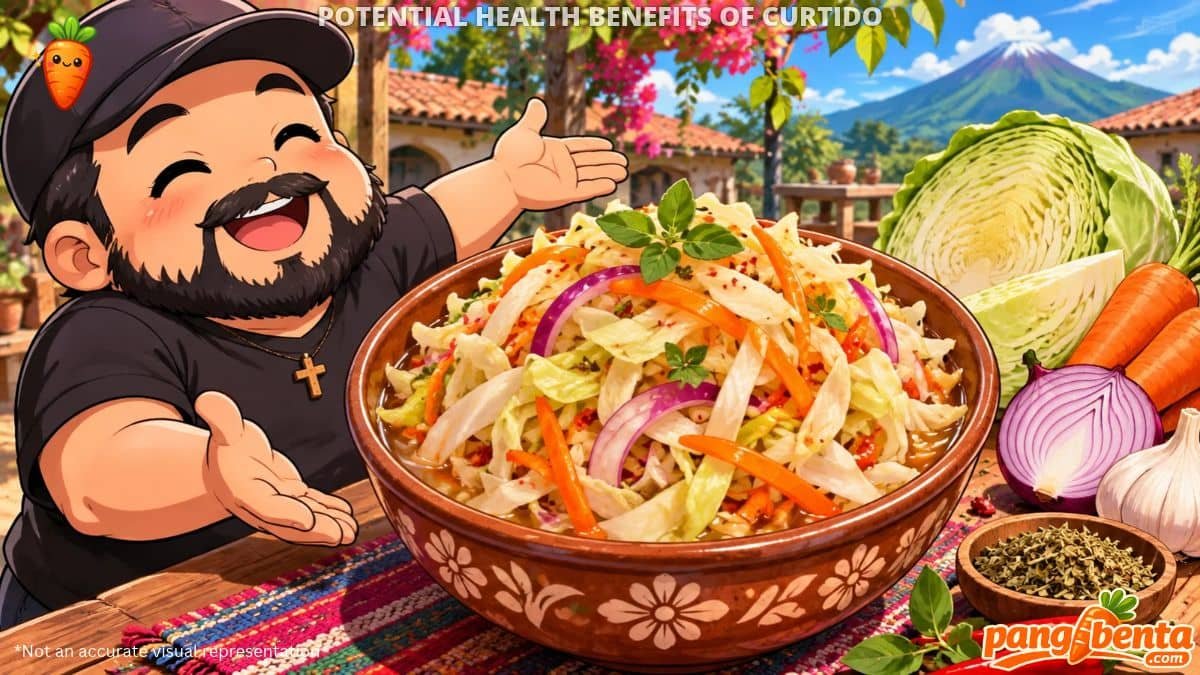
Curtido is a traditional Salvadoran cabbage relish commonly served alongside pupusas, a popular Salvadoran dish made from corn or rice flour dough with various fillings.
Its typical ingredients include shredded cabbage, carrots, onions, oregano, salt, and sometimes chili peppers.
Curtido can be prepared through natural fermentation or quick pickling with vinegar. During natural fermentation, lactic acid bacteria convert naturally occurring sugars in the vegetables into lactic acid, giving curtido its characteristic tangy flavor while helping preserve the ingredients.
Both varieties offer nutritional benefits, but naturally fermented, unpasteurized curtido may provide additional benefits associated with live microorganisms and fermentation-derived compounds.
📙 Potential Health Benefits of Cucumber Soup
Potential Health Benefits of Curtido
1. May Support Gut Health
One of the most promising potential health benefits of naturally fermented curtido is its ability to support a healthy gut microbiome.
During fermentation, various lactic acid bacteria grow and produce organic acids and other compounds that may interact beneficially with the intestinal environment.
A 2021 study published in Cell found that a diet containing a variety of fermented foods increased gut microbial diversity and reduced several inflammatory markers in healthy adults.
Curtido also contains dietary fiber, some of which can serve as a food source for beneficial gut bacteria.
Although these findings are encouraging, further research is needed to establish the specific effects of curtido on the human gut microbiome.
📙 Potential Health Benefits of Coffee Jelly
2. Promotes Healthy Digestion
The combination of dietary fiber and fermentation-derived compounds may make curtido a useful addition to a digestive-friendly diet.
Dietary fiber helps promote regular bowel movements, maintain healthy stool consistency, and prevent constipation when consumed in adequate amounts as part of a balanced diet.
Fermentation can also break down certain carbohydrates and other food components, potentially improving digestibility for some individuals.
However, cabbage and onions contain fermentable carbohydrates that may cause gas, bloating, or abdominal discomfort in sensitive individuals.
📙 Potential Health Benefits of Cucumber Sandwiches
3. Provides Essential Vitamins and Minerals
Curtido provides various nutrients derived from its vegetable ingredients.
These may include:
- Vitamin C: Supports immune function, collagen production, and wound healing.
- Vitamin K: Contributes to normal blood clotting and bone health.
- Beta-carotene: Found in carrots and converted into vitamin A by the body, supporting vision and immune function.
- Folate: Supports DNA synthesis, cell division, and normal cellular function.
- Potassium: Helps maintain normal muscle and nerve function and contributes to blood pressure regulation.
- Manganese: Plays a role in metabolism and the body’s antioxidant defense system.
The nutritional content of curtido varies depending on its ingredients, preparation method, fermentation process, storage conditions, and serving size.
Since curtido is typically consumed as a condiment or side dish, its contribution to daily nutrient requirements may be modest.
📙 Potential Health Benefits of Creamed Corn
4. May Help Reduce Inflammation
Chronic inflammation is associated with several health conditions, including cardiovascular disease and metabolic disorders.
Cabbage, carrots, onions, and oregano contain various bioactive plant compounds that have demonstrated potential anti-inflammatory properties in scientific research.
Studies on fermented foods also suggest that their microorganisms and fermentation-derived compounds may influence inflammatory responses through interactions with the gut microbiome and immune system.
However, these findings do not establish curtido as a treatment for inflammatory conditions. More human studies are needed to determine whether consuming curtido regularly produces meaningful anti-inflammatory effects.
📙 Potential Health Benefits of Chinese Food
5. Supports Normal Immune Function
A healthy digestive system plays an important role in maintaining proper immune function.
Naturally fermented curtido may contribute to a healthy intestinal environment, while nutrients such as vitamin C and beta-carotene support normal immune responses.
Fermentation may also produce bioactive compounds that interact with the immune system.
Rather than thinking of curtido as an immune booster, I would consider it one of many nutritious foods that can help support normal immune function when included in a balanced diet.
📙 Potential Health Benefits of Corn Stew
6. May Aid Weight Management
If you’re trying to lose weight or maintain a healthy body weight, curtido can be a flavorful addition to your meals.
It is generally low in calories and fat, particularly when prepared without excessive oil or added sugar.
Its dietary fiber contributes to overall fiber intake, which may help promote feelings of fullness. Its tangy flavor can also make meals more satisfying without relying on calorie-dense dressings and sauces.
However, a typical serving of curtido contains only a modest amount of fiber, and there is no convincing evidence that curtido directly promotes fat burning or weight loss.
Its main advantage is that it can complement a nutritious, calorie-conscious diet.
📙 Potential Health Benefits of Corn Soup
7. May Support Heart Health
The vegetables used in curtido provide dietary fiber, potassium, and beneficial plant compounds that contribute to cardiovascular health.
Adequate dietary fiber intake, particularly soluble fiber, may help maintain healthy cholesterol levels. Potassium also plays an important role in blood pressure regulation.
However, curtido’s sodium content is an important consideration. Excessive sodium intake can contribute to elevated blood pressure and increase cardiovascular disease risk.
Although curtido can be part of a heart-healthy diet, it should be consumed in moderation, particularly by individuals with high blood pressure or sodium restrictions.
📙 Potential Health Benefits of Corn Crab Soup
8. Provides Antioxidants and Protective Plant Compounds
Curtido contains several naturally occurring antioxidants and bioactive plant compounds, including vitamin C, carotenoids, flavonoids, and glucosinolates.
These compounds contribute to the body’s defenses against oxidative stress, a process associated with cellular damage and various chronic health conditions.
Fermentation may also change the composition and availability of certain beneficial plant compounds. However, these changes can vary depending on the ingredients, microorganisms, and fermentation conditions.
Including curtido alongside other colorful vegetables is a practical way to increase the variety of beneficial plant compounds in your diet.
📙 Possible Wellness Benefits of Different Dishes
9. May Support Healthy Blood Sugar Management
Curtido is generally low in digestible carbohydrates when prepared without significant amounts of added sugar.
Its relatively low carbohydrate content makes it a suitable accompaniment to meals for individuals who want to manage their blood sugar levels.
The dietary fiber found in its vegetables can also contribute to an overall eating pattern that supports healthy blood glucose regulation.
However, the amount of fiber in a typical serving is relatively small, and there is insufficient evidence that curtido independently lowers blood sugar levels or improves insulin sensitivity.
10. May Support Intestinal Barrier Health
The intestinal barrier helps regulate which substances pass from the digestive tract into the bloodstream while protecting the body from potentially harmful substances.
A 2025 laboratory study on fermented cabbage found that certain fermentation-derived compounds helped protect intestinal cell models against inflammation-related barrier damage.
Although the study focused on sauerkraut rather than curtido, the findings suggest that fermented cabbage products may contain compounds with potentially beneficial effects on intestinal barrier function.
Further human research is needed to determine whether eating naturally fermented curtido offers similar benefits.
Naturally Fermented Curtido vs. Vinegar-Pickled Curtido
Not all curtido offers the same health benefits. The preparation method can significantly influence its microbial content and fermentation-derived compounds.
| Characteristics | Naturally Fermented | Vinegar-Pickled |
| Primary source of acidity | Lactic acid fermentation | Added vinegar |
| Live fermentation-associated microorganisms | May be present if unpasteurized | Not reliably present |
| Dietary fiber | Present | Present |
| Vitamins and minerals | Present | Present |
| Compounds produced by vegetable fermentation | Present | Not necessarily present |
| Preparation time | Generally longer | Generally shorter |
| Sodium content | Varies by recipe | Varies by recipe |
It’s worth noting that fermented foods containing live microorganisms are not automatically considered probiotics.
Scientifically established probiotics are specific live microorganisms that provide demonstrated health benefits when consumed in adequate amounts.
Both types of curtido can be nutritious. However, naturally fermented, unpasteurized varieties are preferable if you’re specifically interested in consuming live fermentation-associated microorganisms.
Potential Side Effects and Precautions
Despite its potential health benefits, curtido may not be suitable for everyone.
- High sodium content: Excessive consumption may be unsuitable for individuals with high blood pressure, kidney disease, or medically prescribed sodium restrictions.
- Gas and bloating: Cabbage, onions, and fermentable carbohydrates may cause digestive discomfort, particularly in individuals with irritable bowel syndrome (IBS).
- Histamine sensitivity: Naturally fermented curtido may contain histamine and other biogenic amines that can trigger symptoms in sensitive individuals.
- Acid reflux: Its acidity and optional chili peppers may aggravate acid reflux symptoms in some people.
- Medication interactions: People taking warfarin should maintain consistent vitamin K intake. Those taking certain monoamine oxidase inhibitors (MAOIs) should follow their healthcare provider’s guidance regarding fermented foods that may contain tyramine.
- Food safety concerns: Improperly prepared or stored homemade curtido may become contaminated with harmful microorganisms.
If you’re making fermented curtido at home, follow a reliable, food-safety-tested recipe, use clean equipment, keep the vegetables submerged in the brine, and avoid arbitrarily reducing the recommended amount of salt.
Follow the recipe’s fermentation and refrigeration instructions to help ensure food safety.
How Much Curtido Should You Eat?
There is no scientifically established daily recommended intake for curtido.
If you’re new to fermented vegetables, starting with one or two tablespoons per day is a reasonable approach. You can gradually adjust your intake depending on your digestive tolerance, nutritional needs, and overall sodium consumption.
A serving of around two to four tablespoons can be a practical addition to meals for many people.
These suggested portions are not established therapeutic doses. The appropriate amount depends on your individual dietary needs and the sodium content of the curtido.
If you’re purchasing commercially prepared curtido, check the nutrition label for sodium and added sugar.
How to Include Curtido in Your Diet
What I like about curtido is its versatility. You don’t have to limit it to traditional Salvadoran dishes.
You can enjoy it with:
- Grilled fish, chicken, or meat
- Sandwiches, burgers, and wraps
- Rice and grain bowls
- Tacos and burritos
- Eggs and breakfast dishes
- Salads and roasted vegetables
- Beans and other legumes
- Pupusas and other traditional Central American meals
If you want to preserve the live microorganisms in naturally fermented curtido, serve it cold or add it to your meals after cooking.
Heating may reduce or eliminate live microorganisms, although many of the vegetables’ nutrients and dietary fiber will remain.
Frequently Asked Questions (FAQ)
1. Is curtido good for gut health?
Naturally fermented curtido may support gut health through its dietary fiber, live microorganisms, and fermentation-derived compounds. However, direct clinical research on curtido remains limited.
2. Is it healthy to eat curtido every day?
Most healthy individuals can enjoy moderate amounts of curtido daily as part of a balanced diet, provided they tolerate it well and monitor their overall sodium intake.
3. Is curtido a probiotic food?
Naturally fermented, unpasteurized curtido may contain live microorganisms with potential health benefits. However, unless specific microorganisms have demonstrated health benefits at adequate intake levels, curtido cannot automatically be classified as a scientifically established probiotic food.
4. Can curtido help with weight loss?
Curtido may complement a weight management diet because it is generally low in calories and can serve as a flavorful alternative to calorie-dense condiments. However, it does not directly burn fat or guarantee weight loss.
5. Is curtido good for arthritis and gout?
Curtido contains plant compounds with potential anti-inflammatory properties, and its typical vegetable ingredients are generally low in purines.
However, there is insufficient evidence that eating curtido directly reduces arthritis symptoms, lowers uric acid levels, or prevents gout attacks. It can be included in a balanced diet but should not replace prescribed treatment.
6. Is curtido suitable for people with diabetes?
Generally, yes. Curtido prepared without excessive added sugar can fit into a diabetes-friendly diet because it is relatively low in carbohydrates. Its sodium content and the overall nutritional composition of the meal should still be considered.
7. Is curtido healthier than kimchi or sauerkraut?
Not necessarily. All three can provide valuable nutrients and beneficial plant compounds, while their naturally fermented, unpasteurized varieties may contain live microorganisms.
Their relative health benefits depend on their ingredients, preparation methods, sodium content, and serving sizes.
8. Does adding vinegar destroy the beneficial bacteria in curtido?
Not necessarily. Adding vinegar can change acidity and influence microbial growth and survival, depending on the amount used and the resulting conditions.
Quick-pickled curtido made primarily with vinegar does not undergo the same fermentation process as naturally fermented curtido. Adding vinegar to already fermented curtido, however, does not automatically eliminate all its live microorganisms.
9. Can curtido cause bloating?
Yes. Cabbage, onions, and their fermentable carbohydrates may cause gas or bloating, particularly in individuals with sensitive digestive systems.
Starting with small portions and gradually adjusting your intake may help you determine your tolerance.
10. Does cooking curtido reduce its health benefits?
Cooking can reduce or eliminate live microorganisms and decrease certain heat-sensitive nutrients, such as vitamin C.
However, cooked curtido can still provide dietary fiber, minerals, and various beneficial plant compounds.
Final Thoughts
Curtido is more than a flavorful condiment. Its combination of vegetables, dietary fiber, essential nutrients, antioxidants, and potentially beneficial microorganisms makes it a worthwhile addition to a healthy diet.
Naturally fermented curtido may offer additional benefits for gut health, while both fermented and vinegar-pickled varieties can contribute to dietary variety and vegetable intake.
Although research on fermented foods is promising, it’s important to recognize that many of curtido’s potential health benefits have yet to be confirmed through direct human studies.
I recommend enjoying curtido in moderation alongside a varied and balanced diet. Sometimes, small dietary additions like this can be an enjoyable and sustainable way to improve the overall quality of what we eat.
Content Disclaimer
This article is intended for informational and educational purposes only and should not be considered a substitute for professional medical advice, diagnosis, or treatment. The potential health benefits discussed are based on scientific research involving fermented foods, fermented cabbage, and the individual ingredients commonly found in curtido. Research specifically examining curtido remains limited, and individual responses may vary. Curtido is not intended to diagnose, treat, cure, or prevent any disease. Always consult a qualified healthcare professional before making significant dietary changes, particularly if you have an existing medical condition, follow a medically prescribed diet, or take medications.